

Note: This is for educational purposes. This is not medical advice, and I am not telling you what you should do. Every person is or should be in control of their own health in spite of what the current medical establishment would like you to believe. If you feel that you need medical advice, you should consult with a well informed open-minded health practitioner or medical doctor that you trust.
I have previously written about the well-established health benefits of borax as a source of boron, an essential trace mineral. Those articles can be read here and here. The articles I am currently working on explore the emerging and fascinating science of boron’s synergistic interactions with polyphenols, vitamins, carbohydrates, sugar alcohols, hormones, enzymes, and more. This particular article focuses on the borate esters that boron forms when combined with polyphenols, complexes that research suggests can significantly support gut health. I hope you enjoy reading it as much as I enjoyed researching and writing it.
Every morning, billions of people around the world perform the same quiet ritual: they brew a cup of coffee. For many, it is the first meaningful act of the day. But coffee is far more than a vehicle for caffeine. Decades of nutritional research have established it as one of the most chemically complex beverages in the human diet, rich in antioxidants and a family of bioactive compounds that scientists are only beginning to fully understand. What if the health story of your morning cup were not yet finished? What if a small, carefully measured addition of a mineral compound, one sitting on the shelves of your grocery store’s laundry aisle, could interact with coffee’s own chemistry in ways that emerging research suggests might enhance what that cup does inside your body?
That compound is borax, the common name for sodium tetraborate. And the science connecting it to coffee is more serious, and more surprising, than the product’s humble label would ever suggest.
Coffee’s Rich Chemistry
To understand why boron and coffee might belong in the same sentence, it helps to first appreciate just how extraordinary brewed coffee is as a chemical mixture. A single cup contains hundreds of distinct compounds formed through the intricate interplay of heat, water, and the complex organic matrix of the coffee bean. Among the most studied and most promising are the chlorogenic acids (CGAs), a class of polyphenolic esters formed when hydroxycinnamic acids are joined to quinic acid. [1]
Coffee is, by a wide margin, the leading dietary source of CGAs for most adults in the Western world. A standard 200 mL cup of brewed coffee has been reported to contain anywhere from 20 to 675 mg of CGAs depending on the roast level and brewing method, with light roasts providing substantially more than dark roasts because the roasting process degrades these compounds. The most abundant individual CGA in coffee is 5-caffeoylquinic acid (5-CQA), and this compound, along with its close relatives, has been the subject of extensive laboratory and clinical investigation. [1, 2]
The biological effects attributed to CGAs are broad and well-supported in the literature. They have demonstrated antioxidant activity, anti-inflammatory properties, modulation of glucose metabolism, and protective effects against cardiovascular and metabolic disease in both in vitro and in vivo studies. A 2022 review published in Foods confirmed their role as protective agents against hepatic, cardiovascular, and neurological insults. [1, 3]
What matters critically for the story that follows is the structural feature that makes CGAs so chemically interesting in the context of boron: they contain ortho-diol motifs, meaning two adjacent hydroxyl (OH) groups positioned on their aromatic ring. These ortho-diol, or cis-diol, configurations are precisely the structural features that boron chemistry targets with exceptional selectivity and affinity. In the language of chemistry, CGAs present what might be described as an open invitation to boron. [4]
What Is Boron, and Why Does It Matter?
Boron is a naturally occurring trace element found in soil, water, and a wide range of plant foods. People encounter dietary boron through fruits, vegetables, legumes, and nuts. The median daily boron intake from food for adults in the United States has been estimated at approximately 1.0 to 1.5 mg per day, though the range is wide depending on diet. Vegetarians and people who eat diets rich in fruits and vegetables may consume considerably more. [5]
The Food and Nutrition Board of the Institute of Medicine established a Tolerable Upper Intake Level (UL) of 20 mg of elemental boron per day (174 mg borax) for adults, a threshold based on toxicological data from animal studies and an assessment of adverse effects in humans. The World Health Organization has described a safe and adequate intake range for adults of approximately 1 to 13 mg per day from all sources combined. It is interesting to note that beneficial effects of boron are only seen at intakes greater than 3 mg/day. [5, 6]
For many years, boron was considered a nutritionally unimportant element in humans, something present in food but not clearly needed. That view has shifted substantially. The landmark review “Nothing Boring About Boron,” published in Integrative Medicine documents boron’s emerging roles in an impressive range of biological processes. These include the regulation of calcium, magnesium, and vitamin D metabolism, enhancement of bone density, modulation of sex hormone activity, support for brain function and cognitive performance, wound healing, anticancer, and significant anti-inflammatory effects including the suppression of tumor necrosis factor-alpha (TNF-alpha) and interleukin-6 (IL-6), two major drivers of chronic inflammation.[6]
The shift in how scientists view boron has accelerated in recent years with the recognition that the element may play an entirely different kind of role, one that is not about the human body’s own cells at all, but about the trillions of microorganisms living in the gut. This is where the story becomes truly remarkable.
The Chemistry of Borate Esters
To understand how boron interacts with coffee’s polyphenols, it is necessary to understand a basic but elegant piece of chemistry: the formation of borate esters.
In water, boron exists primarily as boric acid, B(OH)₃, a mild Lewis acid. Under slightly alkaline conditions, such as those that can exist in the intestinal lumen or in a solution of borax, it converts to the borate anion, B(OH)₄⁻. Both forms are chemically reactive toward compounds that carry cis-diol groups, meaning two adjacent hydroxyl groups on the same side of a molecular bond. When boron encounters such a group, it forms a reversible covalent bond, creating what is called a borate ester. The reaction requires no heat, no harsh solvents, and no specialized equipment. It is a spontaneous, mild condensation reaction that occurs readily in aqueous solution at room temperature and at the pH ranges found both in brewed beverages and in the human gut. [4]
The five- and six-membered ring structures formed in this way between boron and cis-diol compounds are particularly stable, and polyphenols with ortho-diol motifs, such as those found in coffee, form borate esters with notably high affinity. Research examining the mechanisms of boronate ester formation has confirmed that catechol-type ortho-diols, the very type of diol present in CGAs like caffeic acid and chlorogenic acid, are among the strongest binding partners for borate in biological systems. When boron and brewed coffee are combined in a weakly alkaline aqueous environment, the chemical conditions are, in a meaningful sense, ideal for this kind of molecular handshake. [4, 7]
These borate-diol complexes, when they form within the gastrointestinal environment from dietary ligands, have been given a specific and increasingly important designation in the scientific literature: microbiota-accessible boron complexes, or MABCs. [8]
MABCs and the Gut Microbiome
The significance of MABCs goes far beyond simple chemistry. A January 2026 paper published in Frontiers in Microbiology, introduced a concept called “boron symbiotaxis,” which describes the role of boron, specifically when delivered as MABCs, in orchestrating the relationship between the host organism and the gut microbiome. [8]
The key insight from this and related work is that not all ingested boron behaves the same way in the body. Dietary boron enters what researchers describe as two distinct functional pools. The first is plasma-accessible boron (PAB), which consists of freely diffusible boric acid that is absorbed in the upper small intestine and enters the bloodstream, where it exerts systemic effects before being cleared by the kidneys. The second and more recently recognized pool is the MABCs: poorly absorbed conjugates that form in the intestinal lumen when boron reacts with diol-rich ligands such as polyols, chlorogenic acids, fructans, and inulin-type compounds. These MABCs resist digestion, pass through the small intestine largely intact, and arrive in the colon, where they interact directly with the gut microbiome and the mucus layer lining the intestinal wall. [8]
Once in the colon, MABCs fulfill several interlocking functions that researchers now consider potentially essential for maintaining a healthy microbiome. First, they participate in the formation and stabilization of a bacterial signaling molecule called autoinducer-2-borate (AI-2B), which functions as a universal cross-species quorum-sensing signal, meaning it is used by bacteria to communicate with one another and coordinate community behavior. Second, borate’s reversible crosslinking with diol-rich glycoproteins in the mucus layer, called mucins, appears to physically reinforce the intestinal barrier, tightening the mucus hydrogel and reducing the ability of bacteria to penetrate toward the epithelial wall. Third, by supporting quorum signaling and barrier integrity, MABCs appear to promote a microbial ecology centered on the production of short-chain fatty acids, particularly butyrate, which are critical for colon cell health and systemic immune regulation. [8]
The concept of boron symbiotaxis captures the idea that boron, when delivered in the right chemical form to the right part of the gut, plays a coordinating role in the host-microbiome relationship that cannot be replaced simply by ingesting boron in freely absorbable forms like plain boric acid or dilute borax solutions. Form determines function, and the chemical form most relevant to the microbiome is MABCs. [8]
This is where coffee becomes uniquely interesting. Because coffee is one of the most concentrated dietary sources of CGAs and other cis-diol-bearing polyphenols, it provides, with every cup, an extraordinarily rich matrix of potential MABC-forming ligands. Introduce boron into that matrix under the right conditions, and you may be creating a preloaded delivery vehicle for MABCs that arrives at the colon already complexed and ready to perform. [2]
The Borate–Chlorogenic Acid Connection
The idea of intentionally complexing boron with chlorogenic acids is not speculative. It is the explicit subject of an international patent. World Intellectual Property Organization patent WO2023070074A1, titled “Borate Complexes of Chlorogenic Acid and Uses Thereof,” describes the deliberate preparation of borate diesters of chlorogenic acid, compounds designated in the patent as diester chlorogenoborates (DCBs), and documents their properties as indigestible, microbiota-accessible compounds with potential biological applications. The patent notes that DCBs extracted from green coffee beans have demonstrated prebiotic properties in digestibility assays, distinguishing them from simple inorganic borates, which are digestible and do not behave as prebiotics. [9]
This is a critical distinction. Chlorogenoborate complexes, when boron is bound to CGA in the specific diester configuration, behave as indigestible prebiotic boron compounds; that is, they are MABCs. Inorganic boron in free form, ingested alone, would simply be absorbed in the upper intestine as PAB and contribute to systemic boron levels without necessarily forming these protective colonic complexes. [8, 9]
The patent also demonstrates that brewed or prepared coffee contains the structural conditions necessary for this esterification to occur spontaneously. When a source of boron (eg. Borax) is introduced into a CGA-rich aqueous medium, the ortho-diol motifs of the CGAs react with available borate to form these complexes through the same reversible condensation chemistry described in the peer-reviewed literature. The patent formalizes what the chemistry predicts: brewed coffee and dissolved borax, combined under the right conditions, constitute a natural reaction system capable of producing borate-CGA complexes. [4, 7, 9]
Borax as the Source of Boron: History, Purity, and Context
For most practical purposes, the most accessible and affordable source of elemental boron for home use is borax: sodium tetraborate decahydrate, with the chemical formula Na₂B₄O₇·10H₂O. Borax contains approximately 11.3% boron by weight, meaning that 100 mg of borax delivers roughly 11 mg of elemental boron. This simple conversion factor is the cornerstone of any safe dosing calculation. [10]
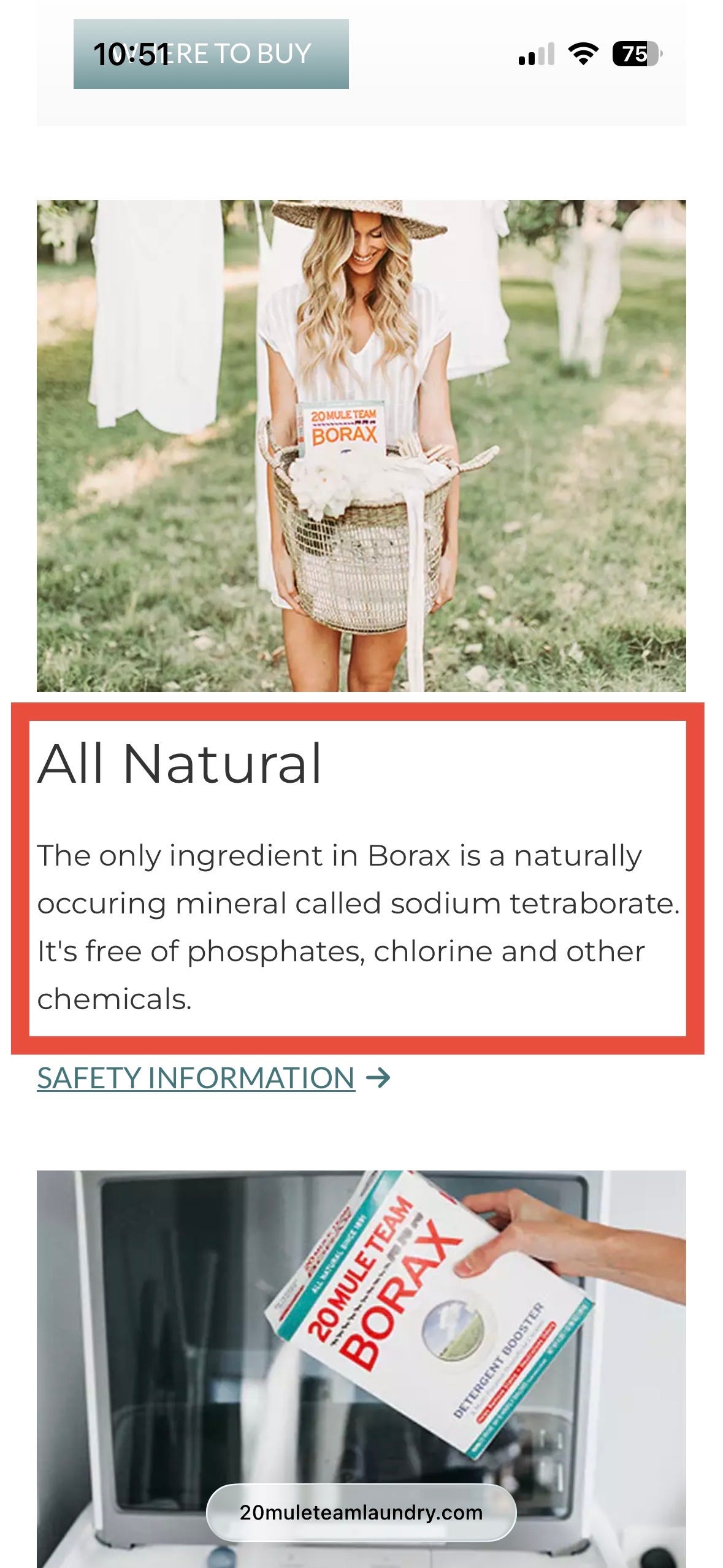
The most widely recognized commercial borax product in the United States is 20 Mule Team Borax, a brand that has been sold for over a century and is found in virtually every grocery and hardware store. An important historical detail, relevant to any discussion of its purity, comes from the brand’s own website. According to the most updated version of the website, 20 Mule Team Borax does not have any added ingredients and contains only the naturally occurring sodium tetraborate. [11]
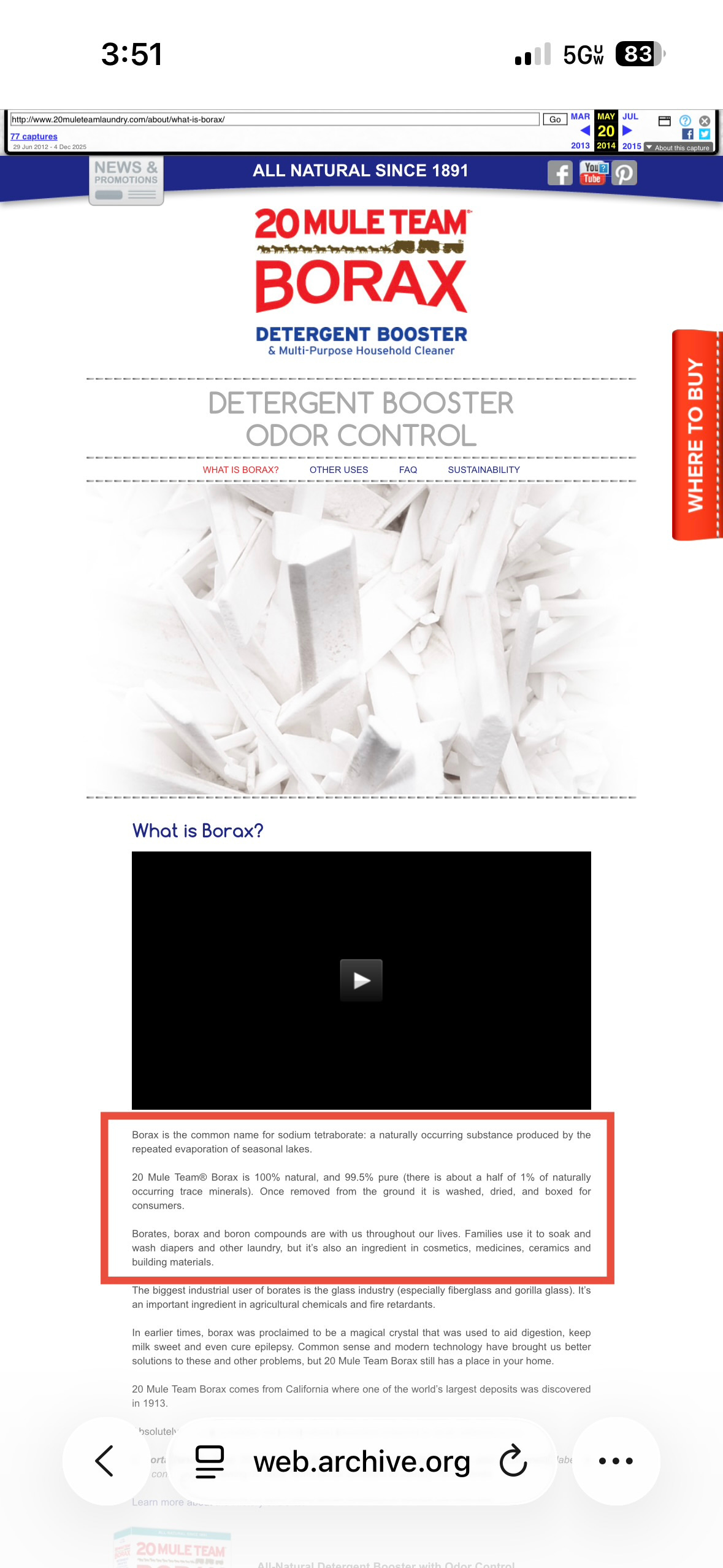
According to a version of the 20 Mule Team Borax website captured by the Internet Archive on May 20, 2014 (Image below), the company stated on its own “What Is Borax?” page that its product was 99.5% pure sodium tetraborate. A purity of 99.5% is comparable to what many chemical suppliers would classify as technical grade or even pharmaceutical grade sodium tetraborate. This level of purity is not trivial: it suggests that at that time, at least, the commercial laundry product contained very little beyond its stated compound. [12]
However, an important distinction must be made. Pharmaceutical-grade borax is manufactured under formally validated quality control systems, with documented testing for heavy metals, microbial contamination, and other impurities, and it carries a documented chain of custody that laundry-grade products do not. Product formulations can change over time, and commercial laundry products are not manufactured, labeled, or regulated for human consumption. 20 Mule Team still indicates that sodium tetraborate is the only ingredient. Disclamer: The FDA does not permit borax as a food additive in the United States, and it does not carry GRAS (Generally Recognized As Safe) status as a food ingredient. Pharmaceutical-grade borax suppliers do exist, and borax can be purchased from a reputable supplier of pharmaceutical raw materials. The historical 99.5% purity claim from 20 Mule Team Borax is informative context, but it is not a substitute for pharmaceutical-grade certification, and the reader should not interpret it as one. [12, 13]
Calculating a Safe Home Preparation
With the science in place and the necessary safety context established, the question becomes practical: for a reader who wishes to explore the preparation of borate-CGA complexes at home using pharmaceutical-grade borax and freshly brewed coffee, what does a safe, responsible approach look like?
The most important number to keep in mind is 20 mg per day. That is the Tolerable Upper Intake Level (UL) for boron established by the Food and Nutrition Board. The average Western diet contributes only 1.0 to 1.5 mg of boron per day from foods alone, any addition from borax should be calculated to keep total daily boron intake beneath 20 mg, accounting for dietary background. [5]
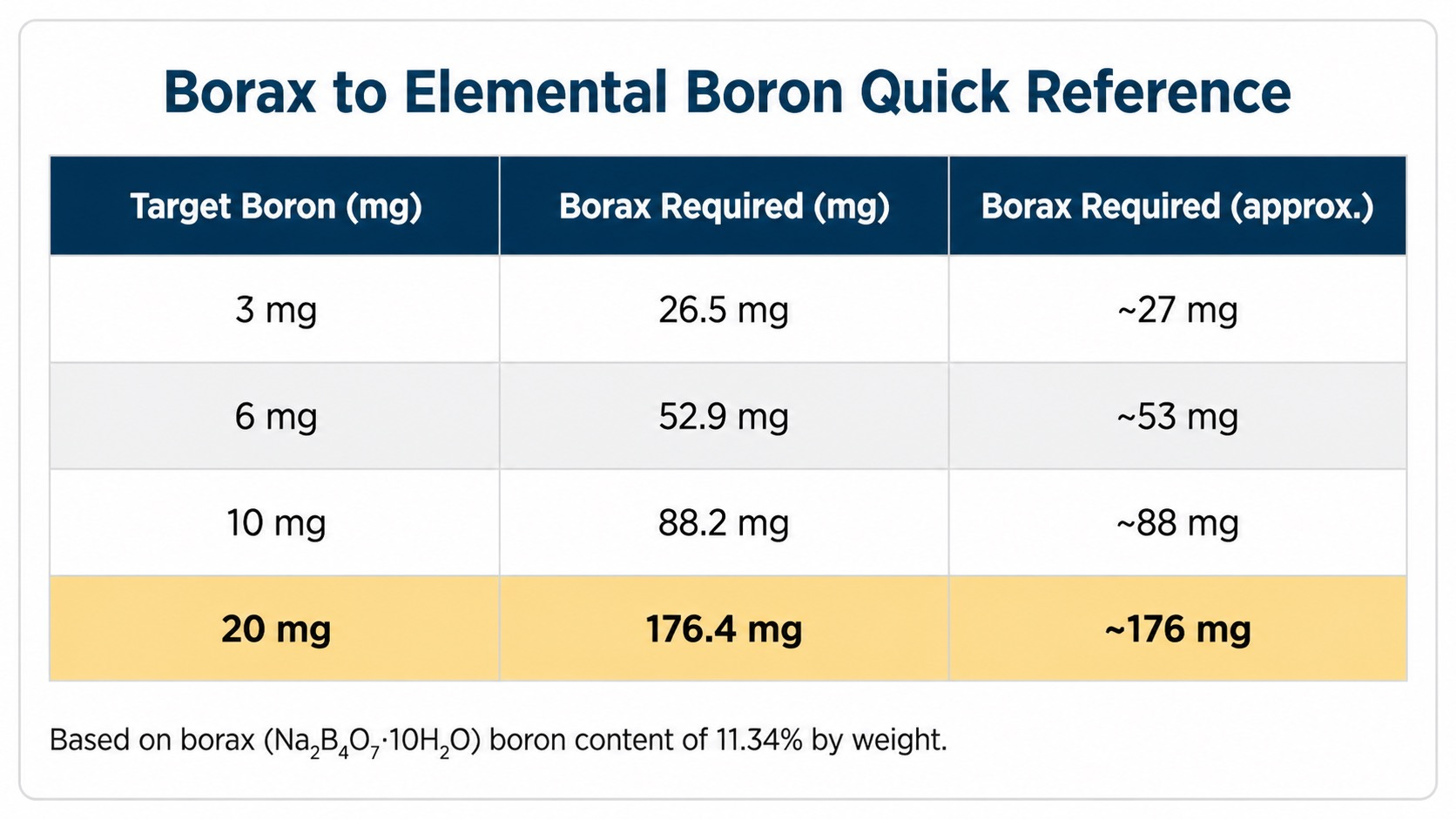
The arithmetic is straightforward once the 11% figure is understood. Borax contains approximately 11.3% boron by weight. To put those numbers in practical terms: 27 mg of borax delivers approximately 3 mg of boron, a modest supplemental amount well within commonly studied research doses. Moving up the scale, 90 mg of borax delivers approximately 10 mg of boron, a moderate dose that, combined with a typical dietary intake still remains below the 20 mg UL. And 180 mg of borax delivers approximately 20 mg of boron, which represents the established UL for total daily intake of boron. In practice, a target of 3 to 6 mg of supplemental boron per day, requiring approximately 27 to 55 mg of pharmaceutical-grade borax, is a conservative and reasonable starting point for a curious reader. [5, 6, 11]
These amounts are tiny, far smaller than anything that can be reliably measured with a kitchen spoon or even a postal scale. A precision milligram scale, available online for under twenty dollars, is a good way to find your specific dose. Having one of these scales is essential for anyone who makes some of their own supplements, as I do. After doing my own work with the scale, I have found that my small pinch gives me 5 mg of elemental boron, which works out to 44 mg of borax. Below is a reference table for various amounts of borax and the elemental boron available in each amount.
The preparation method itself is simple. Until you are used to “your pinch” and it’s weight, Weigh the desired amount of borax on a milligram-accurate scale. Dissolve by stirring it in the coffee. Initially, coffee is naturally acidic, with a pH typically between 4.5 and 5.5, but the combination will produce a mildly buffered borate solution mixed throughout the CGA-rich matrix of the coffee. The borate will encounter an enormous reservoir of ortho-diol groups from the CGAs, and spontaneous esterification will begin.
Curious note: In the previous paragraph there is significant unmentioned chemistry occurring. This chemistry occurs with the mixing of the coffee, the digestion in the stomach, and the ultimate absorption in the small intestine. Much of the esterification of the boron will occur in the small intestine. There will be significant speciation of the borax, which initially is converted to boric acid. Some of this chemistry is deep and if you’re interested in a deeper dive, let me know in the comments and I can write an article on that. I need at least 20 interested readers to let me know if they’re interested in that because it will not be a simple paper to produce.
The goal here is two-fold. First, to use borax as a boron supplement for plasma available boron (PAB), and second, to create borate-CGA complexes in situ, within the coffee itself, so that those complexes arrive in the colon partially preformed and ready to function as MABCs. [8, 9]
A Measured Conclusion
The science presented in this article sits at an exciting but early frontier. The chemistry of borate esters with cis-diol polyphenols is well established in the peer-reviewed literature, and I will be writing more about this fascinating topic.
The concept of MABCs as a distinct and functionally important pool of dietary boron is supported by a growing body of work from multiple research groups across different countries that explicitly revisit boron’s role through the lens of microbiome science. The patent on borate diesters of chlorogenic acid confirms that the specific application of boron to coffee’s polyphenols has already attracted serious scientific and commercial interest. [4, 7, 8, 9]
What remains less established is a robust body of clinical trial data in humans that directly tests the health outcomes of consuming borate-CGA complexes prepared from coffee and borax at home. The mechanisms are compelling, but the translation from mechanism to clinically demonstrated benefit requires more rigorous human studies than currently exist. This is the current state of the science, and I hope that this is not another one of those “Big Pharma” memory hole topics. If you already put borax in your morning cup of coffee, you may be doing more for your health than you realize.
Curious note: If you’ve read this far and you’re wondering what form of borax I use, you deserve to know. I have been using the same box of 20 Mule Team Borax that I purchased three or four years ago. That single $5 box should last me between 30 and 60 years depending on how much I take each day. I’m not telling you what you should do. I’m just telling you what I do.
References
1. Rojas-González A, et al. Coffee Chlorogenic Acids Incorporation for Bioactivity Enhancement of Foods: A Review. Molecules. 2022 May 25;27(11):3400. https://pmc.ncbi.nlm.nih.gov/articles/PMC9181911/
2. Nguyen V, Taine EG, Meng D, Cui T, Tan W. Chlorogenic Acid: A Systematic Review on the Biological Functions, Mechanistic Actions, and Therapeutic Potentials. Nutrients. 2024 Mar 23;16(7):924. https://pmc.ncbi.nlm.nih.gov/articles/PMC11013850/
3. Yuan Q, et al. Pharmacological advances of the chlorogenic acids family: current insights and future research directions. Front Pharmacol. 2025 Oct 10;16:1613048. https://pmc.ncbi.nlm.nih.gov/articles/PMC12549615/
4. Springsteen G, Wang B. “A detailed examination of boronic acid–diol complexation.” Tetrahedron. 2002;58(26):5291–5300. Full article
5. National Institutes of Health, Office of Dietary Supplements. “Boron: Fact Sheet for Health Professionals.” Updated May 2026. https://ods.od.nih.gov/factsheets/Boron-HealthProfessional/
6. Pizzorno L. Nothing Boring About Boron. Integr Med (Encinitas). 2015 Aug;14(4):35-48. PMID: 26770156; PMCID: PMC4712861. https://pmc.ncbi.nlm.nih.gov/articles/PMC4712861/
7. Nishiyabu R, Kubo Y, James TD, Fossey JS. “Boronic acid building blocks: tools for self assembly.” Chemical Communications. 2011;47(4):1124–1150. . Full article.
8. Pîrvu AS, Biţă A, Scorei IR, Gheonea DI, Mogoşanu GD. Boron symbiotaxis: a new concept in host-microbiome communication. Front Microbiol. 2026 Jan 6;16:1719918. https://pmc.ncbi.nlm.nih.gov/articles/PMC12816173/
9. P.L. Thomas & Co., Inc. “Borate Complexes of Chlorogenic Acid and Uses Thereof.” World Intellectual Property Organization Patent WO2023070074A1. Published April 27, 2023. https://patents.google.com/patent/WO2023070074A1/en
10. Vedantu. “The percentage of boron in borax Na₂B₄O₇·10H₂O.” Chemistry reference calculation. https://www.vedantu.com/question-answer/the-percentage-of-boron-in-borax-na2b4o710h2o-is-class-11-chemistry-cbse-5fa25a83644bc72
11 . 20 Mule Team Borax. Homepage. Accessed, May 29, 2026. https://www.20muleteamlaundry.com
12. 20 Mule Team Borax. “What Is Borax?” Archived by the Internet Archive Wayback Machine, May 20, 2014. https://web.archive.org
13. U.S. Food and Drug Administration. (2024, March 9). Generally recognized as safe (GRAS). https://www.fda.gov/food/food-ingredients-packaging/generally-recognized-safe-gras
I look forward to your next article on this subject. I started with a pinch in my morning coffee and it has freed my joint pain. I did not realize the benefits of it in the gut. Thank You!
Also worthy of note when consuming Boraxo in your coffee it is a salt and thus lowers the bitter taste of the coffee by also attaching to the bitter taste receptors. But you can also use sodium bicarbonate to lower the bitter taste. I used to wet my finger put it in the Boraxo as my portion control to consume it but I will just stir my coffee with it.
Wonderful Article, Thank You so much!