

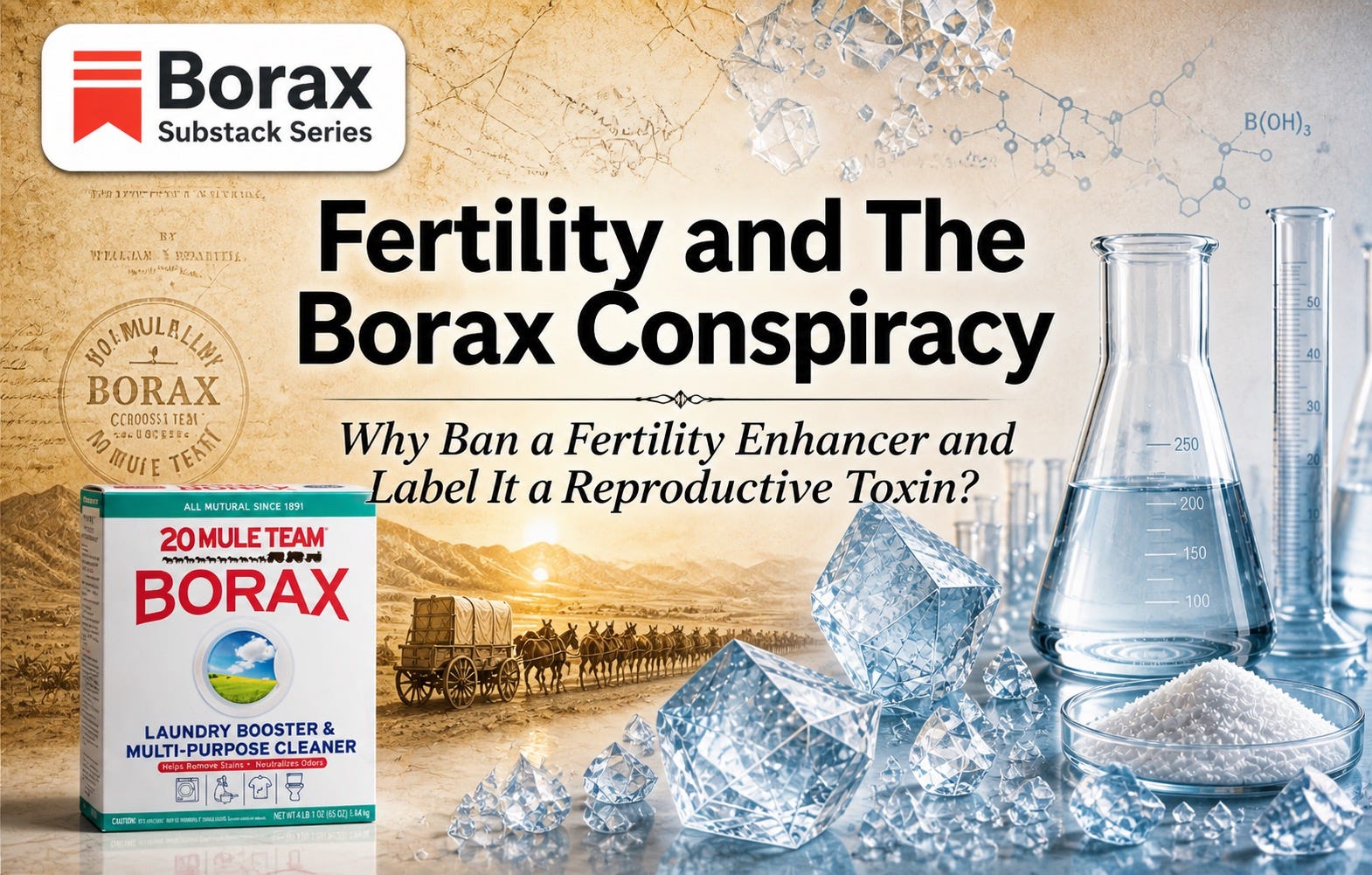
The European Union classifies boric acid and borax as Category 1B reproductive toxins, placing them in the same regulatory tier as thalidomide-class hazards. Yet a substantial body of animal research spanning goats, rams, rabbits, swine, cattle, poultry, and fish shows that low-to-moderate boron doses actually support or improve fertility parameters. Multiple human epidemiological studies have also clearly demonstrated no reproductive harm, even among workers with high, borax-mining-related occupational exposure. And if that isn’t enough to raise an eyebrow, wait until you see where the EU itself quietly allows borax back into the food supply, a detail that exposes just how selective this “ban” really is. [1, 2]
The Hormetic Pattern Regulators Overlook
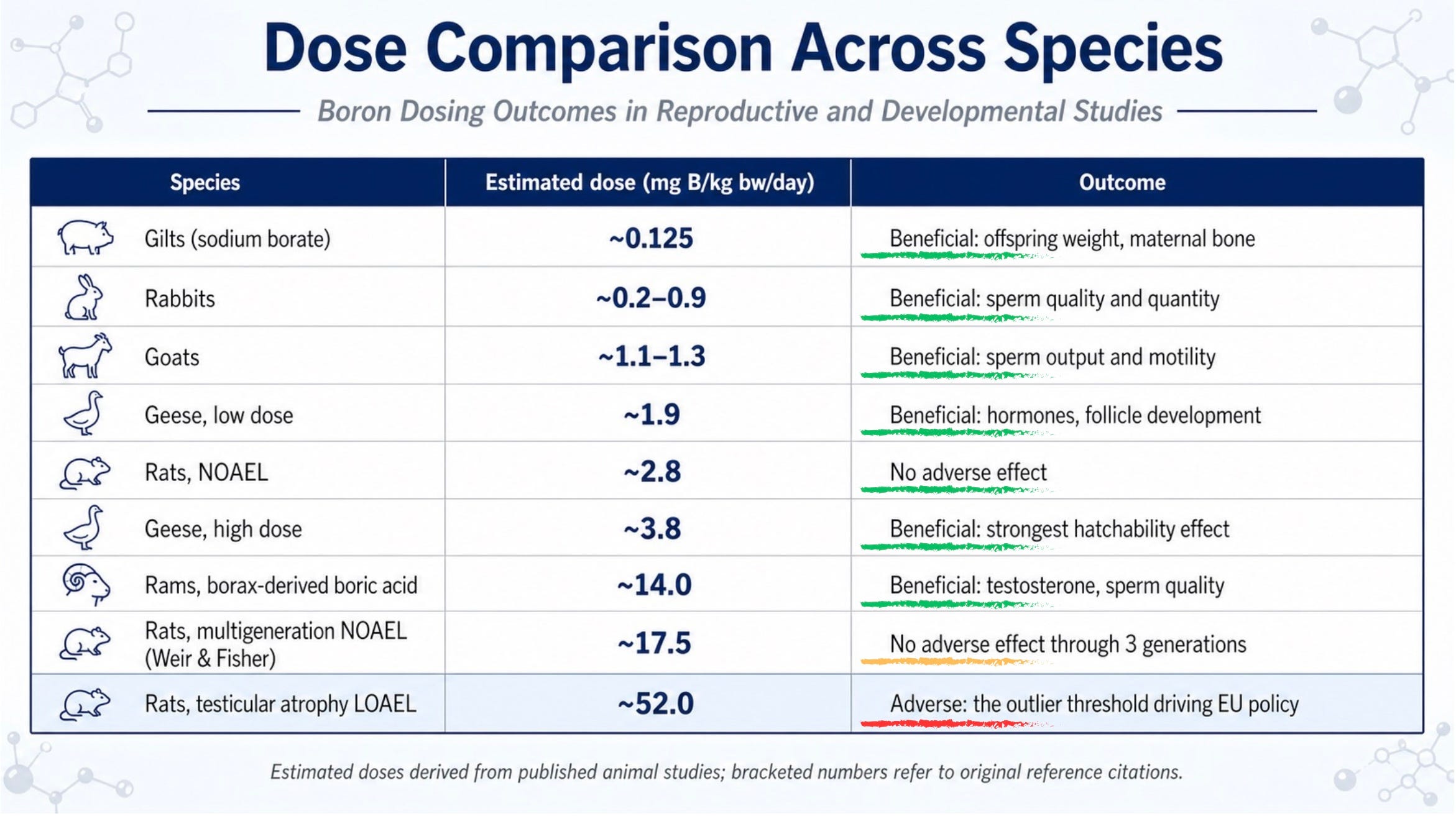
Boron does not behave like a linear toxin. Across nearly every species studied, it follows a hormetic, or biphasic, dose-response curve: deficiency and excess both cause harm, while a broad middle range supports reproductive function. [3] The EU’s Category 1B classification stems almost entirely from high-dose rodent studies — particularly the Weir and Fisher two-year rat feeding trial that identified testicular atrophy only above roughly 52 mg B/kg body weight per day, with a robust no-observed-adverse-effect level (NOAEL) around 17.5 mg B/kg bw/day sustained through three generations. Extrapolating that ceiling effect to every boron-containing product, at every dose, misrepresents the actual shape of the data. [4]
What the Animal Literature Actually Shows
Goats: The most thoroughly documented benefit
Dietary borax at roughly 1.1–1.3 mg Boron/kg bw/day significantly raised sperm concentration and total sperm output in adult male goats, correlating with blood and seminal boron levels and upregulating key testicular immune and antioxidant genes. A companion trial at 70 mg boron per kg diet over six months raised serum testosterone and boosted expression of CYP17A1, a core steroidogenesis gene, with histology confirming healthier testicular structure. Boron-enriched semen extenders also produced the highest post-thaw sperm motility in Angora goat cryopreservation trials. [5, 6, 7]
Rams: Testosterone and semen quality rise together
At an estimated 14.0 mg B/kg bw/day using borax-derived boric acid in the diet, rams showed significantly increased testosterone, greater sperm concentration, larger seminal volume, and fewer abnormal sperm over a four-month trial. In Merino ram semen extenders, a modest 0.25 mM boron concentration produced the best post-thaw motility, mitochondrial activity, and viability, while higher concentrations began impairing antioxidant gene expression, illustrating the hormetic effect within a single study. [8, 9]
Rabbits: Every tested dose improved semen quality
Borax supplementation in adult male rabbits significantly increased sperm concentration, total output, motility, live sperm percentage, and normal morphology at every dose level tested, alongside improved antioxidant capacity and testosterone. [10]
Swine: Better piglets, not more piglets
Weanling gilts fed roughly 0.125 mg B/kg bw/day (from borax (sodium borate)) over a long-term trial produced heavier, more viable piglets at weaning and showed improved bone strength in sows without any negative effect on litter size. [11]
Cattle: Metabolic support for postpartum reproduction
Peripartum dairy cows given boron supplementation showed reduced negative energy balance markers, supporting the metabolic readiness needed for postpartum reproductive cycling. Boric acid added to Jersey bull semen extenders at microgram concentrations also protected sperm motility and mitochondrial function during cryopreservation. [12, 13]
Poultry: Hormones, follicles, and hatchability improve at low doses
Wanxi white geese fed 57 and 114 mg boron per kg diet showed significantly increased reproductive hormones, better follicular development, and improved egg qualification and hatchability rates, with the higher dose showing the strongest benefit. Japanese quail fed 25 mg nano-boron per kg diet showed the best yolk index, while higher doses reduced hatchability — again demonstrating the hormetic ceiling directly in a female reproductive outcome. Layer hens fed 75–150 mg boron per kg diet improved bone strength and mineral retention, and an in-ovo sodium borate injection at 0.5 mg increased hatching power in broiler chicks compared to higher doses. [14, 15, 16, 17]
Fish and cryopreservation studies across species
Brown trout sperm treated with 0.4 mM boron in cryopreservation extender showed significantly higher fertilization and eyeing rates with less DNA damage. Ankara buck semen extenders containing boron at 0.25 mM and 1 mM improved post-thaw motility from 66% in untreated controls to over 76%, while also reducing DNA damage after thawing. [18, 19]
Rats: Safety within a wide range, protection against damage
Rat data are the backbone of the EU’s toxic classification, yet the data actually supports a much more favorable picture of borax on fertility when looking at low to moderate doses which are far below what has shown reproductive it harm. The Weir and Fisher multigeneration study found completely normal litter size, progeny weight, and reproduction through three generations at 5.9 and 17.5 mg B/kg bw/day, with testicular atrophy appearing only far above that range. Separately, boron protected against high-fat-diet-induced sperm damage, histopathological injury, and DNA damage in Wistar rats, showing no harm within its tested dose range. A systematic review of other animal studies (rabbits, rams, goats) similarly found that dietary boron at 17.5–70 mg per kg of feed improved spermatogenesis quality in some trials. [3, 4, 20, 21]
(Curious note: using standard feed-intake conversion factors, 17.5–70 mg per kg of diet translates to an estimated 0.5–3.5 mg B/kg body weight per day, a range well below the 17.5 mg B/kg bw/day no-adverse-effect level established in the Weir and Fisher rat study.)
Female Fertility: The U-Shaped Curve on the Other Side of the Equation
Nearly all of the article above concerns male reproductive parameters, but a parallel body of research on female fertility — implantation, embryo viability, ovulation, egg quality, and pregnancy outcomes — shows the same biphasic pattern.
The same Weir and Fisher multigeneration study anchoring the male rat data above also tracked female outcomes directly. At 5.9 and 17.5 mg B/kg bw/day, female Sprague-Dawley rats showed completely normal litter size and reproductive performance through three generations, with a NOAEL for female fertility separately confirmed at 17.5 mg B/kg bw/day in later toxicological reviews. Only at much higher doses — around 52–58.5 mg B/kg bw/day — did females show decreased ovulation, and only above roughly 116 mg B/kg/day did outright failure to conceive appear, mirroring the male testicular-atrophy threshold in the same strain. [22, 23]
Dedicated embryo-level research pushes the female-side evidence further toward true essentiality. A landmark series of in vitro and in vivo studies found that low-boron diets reduced the number of implantation sites in pregnant rats and separately impaired blastocyst formation, blastocyst cell number, and increased embryo degeneration in cultured mouse preimplantation embryos — demonstrating that the female reproductive system responds to boron deficiency, not only to excess. A parallel study in Xenopus laevis found that chronic feeding of a low-boron diet adversely affected reproduction and development, reinforcing that the U-shaped curve on the female side spans amphibians as well as mammals. [24, 25]
The strongest positive female-fertility signal, though, comes from the poultry data already introduced above. In Wanxi white geese, the 114 mg/kg boron group showed measurable improvements in egg qualification rate, hatchability, egg yolk ratio, and egg shape index compared to controls, alongside enhanced follicular development — a genuine reproductive enhancement, not merely a safety threshold, on the female side of the ledger. [14]
Frogs: Essentiality, not enhancement
Xenopus laevis frogs deprived of boron showed reduced testis weight and sperm count compared to boron-sufficient frogs, while high-dose boric acid (15 mg B/L) caused sperm reduction and dysmorphology, establishing a NOAEC around 10 mg B/L. This is a U-shaped essentiality curve — harm at both deficiency and excess — not evidence of enhancement, and it should be read as proof that boron is a required nutrient, not proof of danger.[26, 27, 28]
Dose Comparison Across Species Table
Human Data: No Reproductive Harm, Even at High Occupational Exposure
It’s worth noting that virtually all human research on boron and reproduction has been designed to detect toxicity or harm, not to identify or measure potential fertility benefits. In spite of this, at least one such study reviewed below still picked up an improved fertility trend at moderate exposure levels.
Occupational borax miners are exposed to boron at roughly a tenth to a thirtieth of the dose that causes reproductive harm in animal studies, and even at these real-world exposure levels, they show no reproductive damage. [29]
A study of Turkish subpopulations exposed to elevated environmental boron, much of it from borax-mineral-rich soil and water, found childlessness rates of about 3.17% among the exposed group versus 4.48% in unexposed controls, statistically indistinguishable and, if anything, lower in the exposed group. A separate Turkish village study comparing drinking water at 8.5–29 mg B/L against water at only 0.03–0.40 mg B/L found no fertility or sex-ratio differences, with 96% of marriages in both groups producing children. A sibling-based “borate families” study similarly found childlessness rates of only 2.3–4.0%, showing no infertility clustering in families with generational borate exposure. [30, 31, 32]
Evidence also comes from Chinese borax and boron mineral workers in Liaoning province, who consumed an average of 31.3 mg boron per day, with heavily exposed individuals reaching up to 125 mg elemental boron per day, doses that dwarf typical dietary intake. These workers showed no significant differences in semen or reproductive parameters compared to controls aside from an unexplained shift in sperm sex-ratio that did not correlate with actual measured boron levels. A comprehensive toxicology review by Bolt (2020) concluded that even the highest occupationally exposed human blood boron levels remain far below the levels shown to cause harm in rats. Another study specifically examining chronic boron exposure and human semen parameters likewise found no evidence of reproductive harm. [1, 33, 34]
Most of this human data focused on toxicity and toxicity parameters rather than fertility benefit but, there is one important exception worth detailing: Cortés et al. (2017) studied young Chilean men exposed to varying boron levels through drinking water and found a genuine U-shaped, hormetic dose-response curve. Sperm parameters were best in the medium-exposure group, while men in the high-exposure group showed a slight decline in sperm morphology, concentration, motility, and vitality, the same four fertility-relevant parameters that improved at moderate boron levels in the animal studies discussed earlier in this article. The researchers concluded this pattern is consistent with boron’s classification as an essential micronutrient rather than a simple toxicant, since harm appeared only outside the beneficial middle range, not as a straight-line dose-response. [33]
Why a EU Ban on Borax Misrepresents the Science
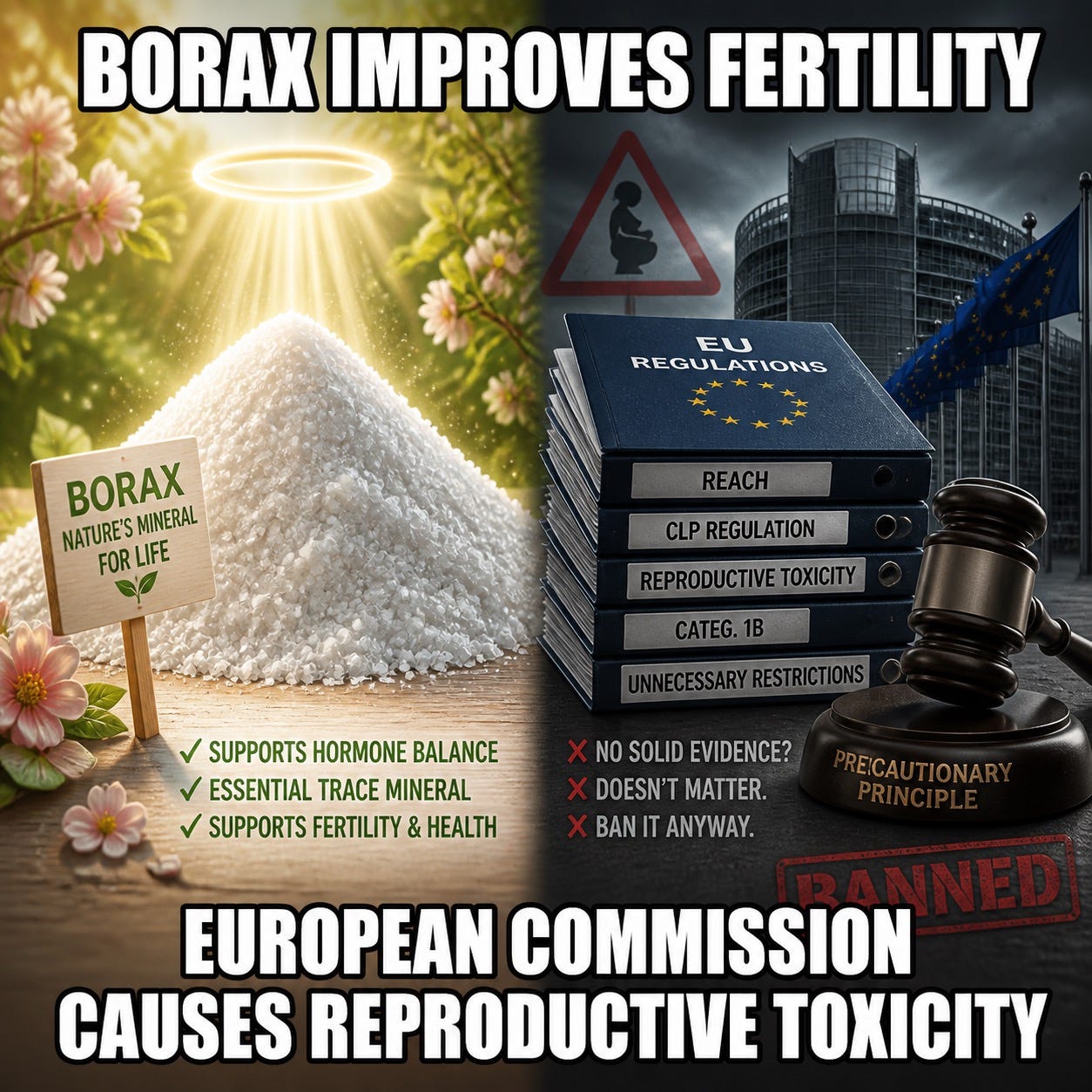
The EU’s Category 1B classification, which triggered the removal of borax from household sale and forced generic concentration limits down to just 0.3% in consumer products including toys, rests almost entirely on high-dose rat studies where testicular atrophy appeared only far above the doses relevant to human dietary or occupational exposure. This regulatory posture creates a public impression that any boron exposure, from a laundry booster, a cosmetic preservative, or a trace mineral supplement, carries serious risk. That impression collapses under scrutiny. Three separate comprehensive reviews of the human and animal literature, spanning more than a decade of independent analysis, have each concluded that real-world human exposure never approaches the doses shown to cause harm in animals. [35]
The animal literature actually demonstrates the opposite pattern at the doses people realistically encounter: goats, rams, rabbits, swine, cattle, and poultry all show measurable fertility benefits from boron, often supplied specifically as borax-derived boric acid or sodium borate, at doses well below any adverse effect level. Even in rats, the species driving EU policy, a wide dose range from roughly 6 to 17.5 mg B/kg bw/day showed completely normal reproduction across three generations, on both the male and female side. Human epidemiological data, including from workers consuming up to 125 mg of boron daily, show no reproductive toxicity at all. Treating borax as a blanket reproductive hazard ignores that boron’s toxicity is dose- and species-dependent, not an intrinsic property of the molecule itself.
Curious note: 125 mg of elemental boron would be the equivalent of 1,106 mg of borax.
A more defensible regulatory approach would mirror what the science actually shows: set exposure limits based on realistic human intake scenarios, distinguish trace dietary or cosmetic exposure from industrial-scale ingestion, acknowledge that the same compound the EU restricts as a reproductive hazard has, in the animal kingdom, consistently shown to be a fertility-supporting trace mineral, and drop the borax ban.
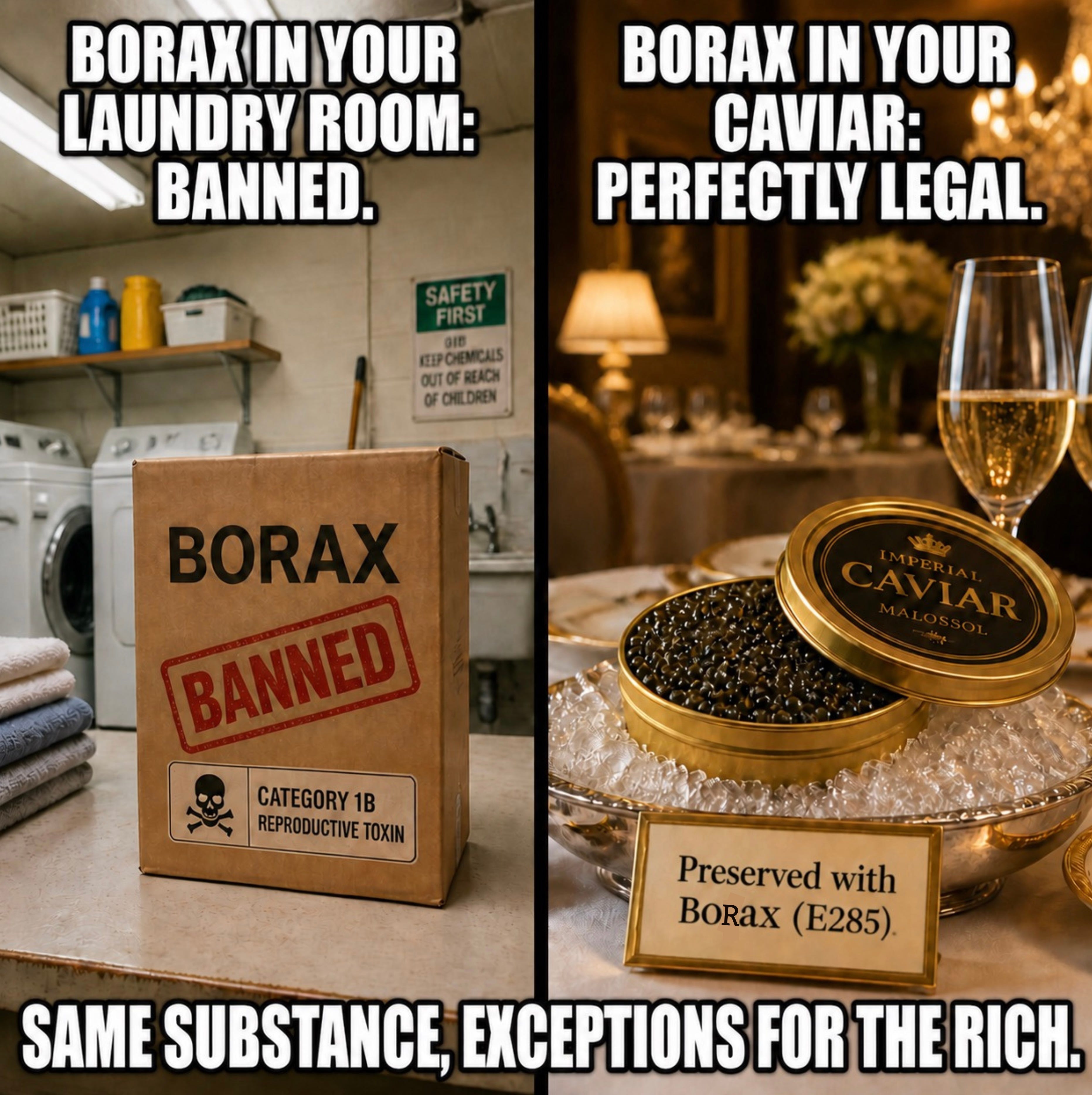
If any single fact exposes the incoherence of the EU’s position, it is this: the same regulatory body that classifies borax as a Category 1B reproductive toxin — too dangerous for household cleaners, laundry boosters, or toy putty — carves out a specific exception allowing borax to be added directly to sturgeon caviar for human consumption. A substance supposedly capable of causing reproductive and developmental harm at trace exposure is, apparently, safe enough to eat on a cracker, provided it’s eaten by someone wealthy enough to afford sturgeon caviar. [4, 36, 37, 38] No toxicological principle explains why a compound too hazardous for a bar of soap is acceptable in a luxury food product with no realistic exposure ceiling for ambitious consumers. The only consistent explanation is that this classification was never really about dose, species, or realistic human exposure; it was about which industries or persons had the leverage to implement an unjustified reproductive toxicity ban on a trace mineral that supports fertility. That double standard is the clearest evidence yet that the EU’s borax policy does not reflect the science, and makes one question the true motive of the regulatory body or those that control it.

References
1. Bolt HM, Başaran N, Duydu Y. Effects of boron compounds on human reproduction. Arch Toxicol. 2020 Mar;94(3):717-724. doi: 10.1007/s00204-020-02700-x. Epub 2020 Mar 13. PMID: 32170343. Full Article
2. Abdelnour SA, et al. The vital roles of boron in animal health and production: A comprehensive review. J Trace Elem Med Biol. 2018 Dec;50:296-304. Full Article
3 . Calabrese E, et al. Boron enhances adaptive responses and biological performance via hormetic mechanisms. Chem Biol Interact. 2023 May 1;376:110432. https://www.sciencedirect.com/science/article/abs/pii/S0009279723000996
4 . EFSA Panel on Food Additives and Nutrient Sources Added to Food (ANS). (2013). Scientific opinion on the re-evaluation of boric acid (E 284) and sodium tetraborate (borax) (E 285) as food additives. EFSA Journal, 11(10), Article 3407. https://efsa.onlinelibrary.wiley.com/doi/pdf/10.2903/j.efsa.2013.3407
5 . Krishnan, B. B., et al. (2019). Dietary boron supplementation enhances sperm quality and immunity through influencing the associated biochemical parameters and modulating the genes expression at testicular tissue. Domestic Animal Endocrinology. https://www.sciencedirect.com/science/article/abs/pii/S0946672X19301877
6 . Ibrahim, T. B., et al. (2019). Dietary boron supplementation and its impact on testicular function, thyroid activity and serum calcium in male goats. Journal of Animal and Feed Sciences. Full Article
7 . Sani, A., et al. (2024). The use of boron as semen extender in sperm cryopreservation: A systematic review. Biomedical Research Bulletin, 2(3), 108–117. Full Article
8. Ibrahim, et al. (2019). Dietary boron supplementation and its impact on testicular function, thyroid activity and serum calcium in rams. Small Ruminant Research. 174. https://www.sciencedirect.com/science/article/abs/pii/S0921448818302293
9. Bucak, M. N., et al. (2022). Combination of trehalose and low boron in presence of decreased glycerol improves post-thawed ram sperm parameters. Cryobiology. https://pubmed.ncbi.nlm.nih.gov/34779585/
10. Elkomy, Alaa & Abd El-Hady, Ahmed & Elghalid, Osama. (2015). Dietary Boron Supplementation and its Impact on Semen Characteristics and Physiological Status of Adult Male Rabbits. Asian Journal of Poultry Science. Full Article
11. Armstrong, T. A., Spears, J. W., Crenshaw, T. D., & Nielsen, F. H. (2000). Long-term effects of boron supplementation on reproductive characteristics and bone mechanical properties in gilts. Journal of Animal Science, 79(12), 3120–3127. PubMed: https://pubmed.ncbi.nlm.nih.gov/11831513/
12. Basoglu, A., et al. (2017). Effects of boron supplementation on peripartum dairy cattle. Biological Trace Element Research. https://pubmed.ncbi.nlm.nih.gov/28229388/
13. Selvaraju S, et al. Boron Protects Sperm Functional Attributes During Cryopreservation of Bull Semen. Biol Trace Elem Res. 2026 Jan;204(1):268-276. https://link.springer.com/article/10.1007/s12011-025-04679-x
14. Pu M, et al. Impact of Boron on Reproductive Performance, Serum Biochemical Indices, and Egg Quality in Laying Wanxi White Geese. Biol Trace Elem Res. 2026 Mar;204(3):1889-1900. https://link.springer.com/article/10.1007/s12011-025-04791-y
15. Ali Kara M. The impact of different boron levels in diet on performance and eggshell quality of Japanese quails (Coturnix japonica). Saudi J Biol Sci. 2022 Mar;29(3):1796-1800. https://pmc.ncbi.nlm.nih.gov/articles/PMC8913425/
16. Koçbeker, Vildan & Bahtiyarca, Yılmaz & Demirörs, Gökhan. (2017). Effect of Diets with Various Calcium and Boron Levels in Prelaying Period on Growth, Bone Ash and Subsequent Performance and Shell Quality of Laying Hens. International Journal of Medical Science and Clinical Invention. 4. 3335-3340. Full Article
17. Bozkurt, Mehmet & Peşmen, Günnur. (2023). The effects of in ovo injected with sodium borate on hatching performance and small intestine morphology in broiler chicks. Open Chemistry. 21. 20220283. Full Article
18. Bozkurt Y , et al. Effect of Extender Supplemented with Boron on Post-Thaw Motility, Viability, DNA Damage and Fertilization Ability of Cryopreserved Brown Trout (Salmo trutta macrostigma) Spermatozoa. Cryo Letters. 2019 Sep-Oct;40(5):275-283. Cryobiology. https://pubmed.ncbi.nlm.nih.gov/33966065/
19. Karaşör ÖF, et al. The Effects of Different Doses of ROCK Inhibitor, Antifreeze Protein III, and Boron Added to Semen Extender on Semen Freezeability of Ankara Bucks. Molecules. 2022 Nov 21;27(22):8070. https://pmc.ncbi.nlm.nih.gov/articles/PMC9698151/
20. Avdatek, Fatih. (2023). The effects of boron on oxidative stress, reproductive parameters, and DNA damage in testicular tissue in wistar rats on a fatty diet. Full Article
21. Sani, Amin & Sani, et al. (2025). The Effects of Boron on Sperm Qualities and Testicular Histopathology in Animal Studies: A Systematic Review. Journal of Urological Surgery. Full Article
22. Duydu Y, Başaran N, Bolt HM. What can we learn from epidemiological studies on chronic boron exposure? Crit Rev Toxicol. 2023 Dec;53(3):168-180. https://www.tandfonline.com/doi/full/10.1080/10408444.2023.2222151
23. Agency for Toxic Substances and Disease Registry. Toxicological profile for boron. https://www.atsdr.cdc.gov/toxprofiles/tp26-c2.pdf
24. Lanoue, et al. (1998). Assessing the effects of low Boron diets on embryonic and fetal development in rodents using in vitro and in vivo model systems. Biological trace element research. 66. 271-98. Full Article
25. Fort, et al. (1999). Chronic Feeding of a Low Boron Diet Adversely Affects Reproduction and Development in Xenopus laevis. The Journal of nutrition. 129. Full Article
26. Fort DJ, et al. Adverse reproductive and developmental effects in Xenopus from insufficient boron. Biol Trace Elem Res. 1998 Winter;66(1-3):237-59. https://link.springer.com/article/10.1007/BF02783141
27. Fort DJ, et al. Impact of boron deficiency on Xenopus laevis: a summary of biological effects and potential biochemical roles. Biol Trace Elem Res. 2002 Winter;90(1-3):117-42. https://link.springer.com/article/10.1385/BTER:90:1-3:117
28. Fort, D. J., Fort, T. D., Fort, T. L., & Rogers, R. L. (2016). Boric acid is reproductively toxic to adult Xenopus laevis, but immature frogs are more sensitive. Toxicological Sciences, 154(1), 16–27. https://academic.oup.com/toxsci/article-abstract/154/1/16/2422051?redirectedFrom=fulltext
29. Duydu Y, et al. Reproductive toxicity parameters and biological monitoring in occupationally and environmentally boron-exposed persons in Bandirma, Turkey. Arch Toxicol. 2011 Jun;85(6):589-600. Full Article
30. Sayli, B. S. (1998). An assessment of fertility in boron-exposed Turkish subpopulations: 2. Evidence that boron has no effect on human reproduction. *Biological Trace Element Research, 66*(1–3), 409–422. https://pubmed.ncbi.nlm.nih.gov/10050934/
31. Sayli, B. S. (1998). An assessment of fertility in boron-exposed Turkish subpopulations. *Reproductive Toxicology, 12*(3), 297–304. https://pubmed.ncbi.nlm.nih.gov/9628553/
32. Şaylı, B. S. (2003). Relevant data from all centers [sibling-based borate families study]. https://dspace.ankara.edu.tr/bitstreams/dd165c12-e1ac-4f6e-bff3-4b718bc28c17/download
33. Cortés, Sandra & Espinoza-Navarro, Omar & Ferreccio, Catterina. (2017). High Exposure to Boron in Drinking Water and Sperm Parameters in Chilean Young People. International Journal of Morphology. 35. 99-104. Full Article
34. Scialli, A. R., et al. (2010). An overview of male reproductive studies of boron with an emphasis on studies of highly exposed Chinese workers. Reproductive Toxicology, 29(1), 10–24. https://www.scialliconsulting.com/publications/14%20Boron_RTX__2010.pdf
35 . Duydu, Yalçın & Basaran, Nursen. (2023). Effects of boron exposure on human reproduction and development. Current Opinion in Toxicology. 34. 100403. https://www.sciencedirect.com/science/article/abs/pii/S2468202023000189
36 . Scientific Committee on Consumer Safety. (2010). Opinion on boron compounds (SCCS/1249/09). European Commission. https://ec.europa.eu/health/scientific_committees/consumer_safety/docs/sccs_o_027.pdf
37 . European Commission. (2011, November 11). Commission Regulation (EU) No 1129/2011 of 11 November 2011 amending Annex II to Regulation (EC) No 1333/2008 of the European Parliament and of the Council by establishing a Union list of food additives (Text with EEA relevance). Official Journal of the European Union, L 295, 1–177. https://eur-lex.europa.eu/eli/reg/2011/1129/oj
38. Lopez A, et al. Evolution of Food Safety Features and Volatile Profile in White Sturgeon Caviar Treated with Different Formulations of Salt and Preservatives during a Long-Term Storage Time. Foods. 2021 Apr 14;10(4):850. https://pmc.ncbi.nlm.nih.gov/articles/PMC8070692/
Add this to your list of benefits:
Increased groundwater boron concentrations, across the state of Texas, correlate with reduced risk of prostate cancer incidence and mortality.
https://pubmed.ncbi.nlm.nih.gov/17186423/#:~:text=Results%3A%20Groundwater%20boron%20levels%20correlated,0.1%3B%20R%20%3D%200.2).
seeing that elites benefit from use of boron while it is banned for average citizens, the reason for the ban becomes obvious.