
Consuming Borax Is Safe — Consuming the Wrong Dose May Not Be
What the Science Actually Shows About Borax and Boron Safety

Note: This is for educational purposes. This is not medical advice, and I am not telling you what you should do. Every person is or should be in control of their own health in spite of what the current medical establishment would like you to believe. If you feel that you need medical advice, you should consult with a well informed open-minded health practitioner or medical doctor that you trust.
Borax has been officially banned as a food additive in nearly every industrialized nation in the world. I have written this article to explain, in the simplest terms possible, why borax and other boron compounds are not dangerous when they are properly understood and used.
Curious note: The European Union has made one exception to the borax ban in food. Rich people still get borax in their sturgeon caviar. This one fact can reassure you that when borax is used properly, it is not a poison. I have also written about the borax conspiracy here: The Borax Conspiracy
Introduction
Boron is one of those nutrients that sounds simple until you start reading the studies. It shows up naturally in foods, especially fruits, vegetables, and other plant foods, yet when people try to understand how regulators arrived at a daily upper intake for boron, they often run into a thicket of chemical conversions and safety factors that make the numbers seem more mysterious than they really are. [1, 2, 3]
The short version is that the adult upper limit for boron was not pulled out of thin air. It was built from animal studies, mainly studies using boric acid or borax, then converted into elemental boron equivalents, and then pushed downward with uncertainty factors to produce a level meant to stay well below the doses that caused harm in the most sensitive animal models. Are these numbers very, very conservative in order to help keep people “safe”? Yes. [1, 4, 5]
The number people finally see on paper, such as 20 mg of boron per day for adults in the U.S. framework cited by EFSA, sits extremely far below the animal doses that triggered concern and sits above the level see to produce benefit in human studies. It also matters because a dose of borax or boric acid is not the same thing as a dose of elemental boron, and confusing those numbers can make an exposure look much larger than it really is. [1]
First, the chemistry
Before discussing regulation, it helps to separate three related but different things: elemental boron, boric acid, and borax. Elemental boron is the element boron itself, while boric acid and borax are compounds that contain boron along with other elements like sodium, hydrogen, and oxygen. [1, 4, 6]
The EPA toxicological review lists elemental boron content at 17.48% for boric acid and 11.34% for Borax (sodium tetraborate decahydrate), which means most of the weight of each compound is not boron at all. [1, 3, 4]
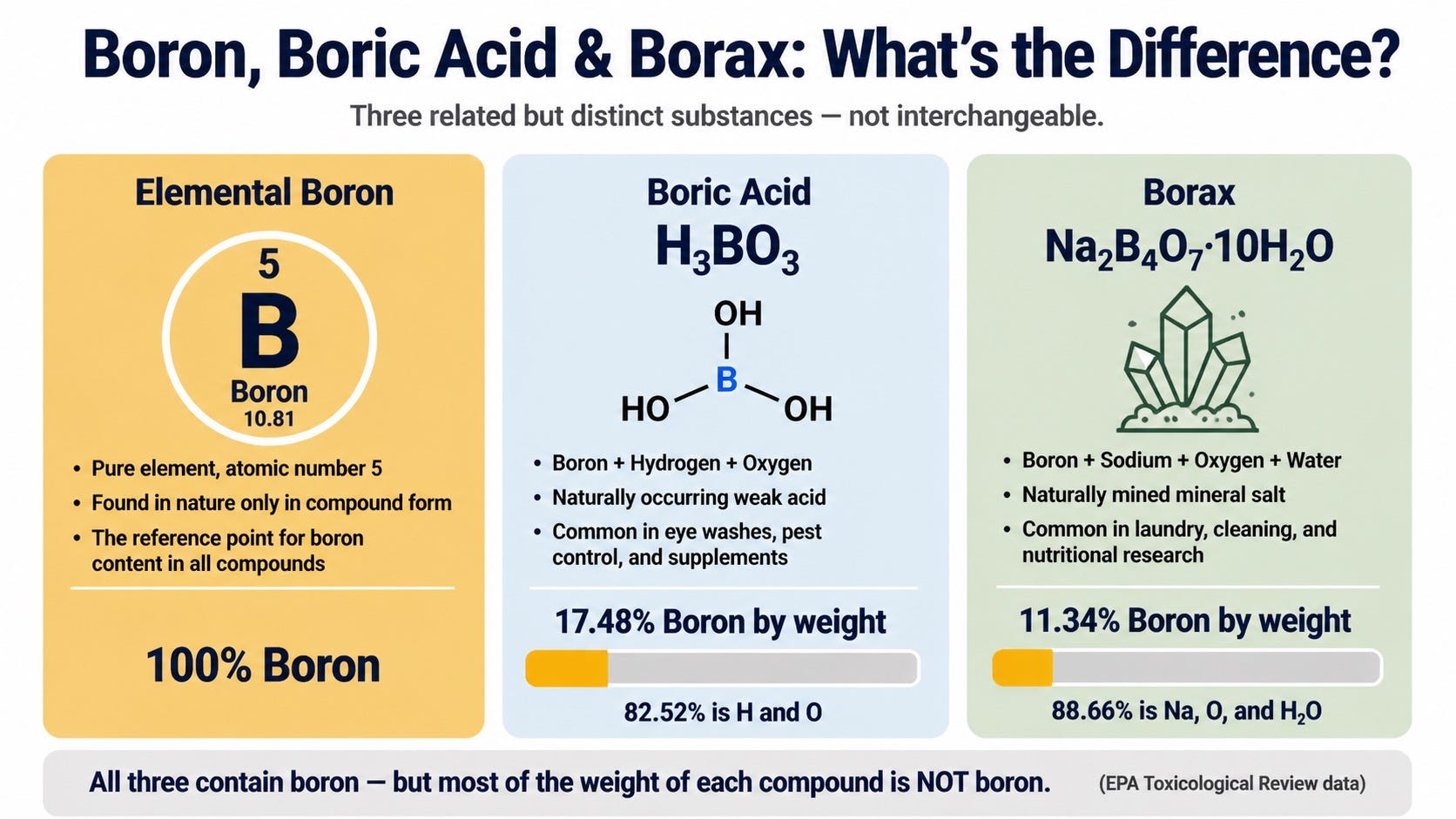
In plain terms, 100 mg of boric acid (H₃BO₃) contains about 17.5 mg of elemental boron, and 100 mg of borax (Na₂B₄O₇·10H₂O) contains about 11.3 mg of elemental boron. So when an animal study says a rat received boric acid or borax, the first thing to ask is whether the reported dose is referring to the whole compound or the amount of elemental boron in the compounds dose. [3]
That conversion changes how people perceive risk. If someone reads “55 mg/kg/day boric acid” and assumes it means 55 mg/kg/day of boron, the exposure looks more than five times larger than the true boron amount; the EPA review notes that 55 mg/kg/day of boric acid is equivalent to 9.6 mg boron/kg/day. [1, 3, 7]
How the upper limit was built
The human tolerable upper intake level, or UL, is not the dose expected to cause harm. It is the highest usual daily intake considered unlikely to pose risk for almost all people, and it is intentionally set far below doses that produced adverse effects in the underlying studies. [8]
For boron, regulators relied heavily on animal data because the direct human evidence was limited. Reviews cited by EPA, EFSA, and other agencies identify developmental toxicity in rats as the critical endpoint, with the rat treated as the most sensitive species among the tested animals. [1, 3, 5, 9]
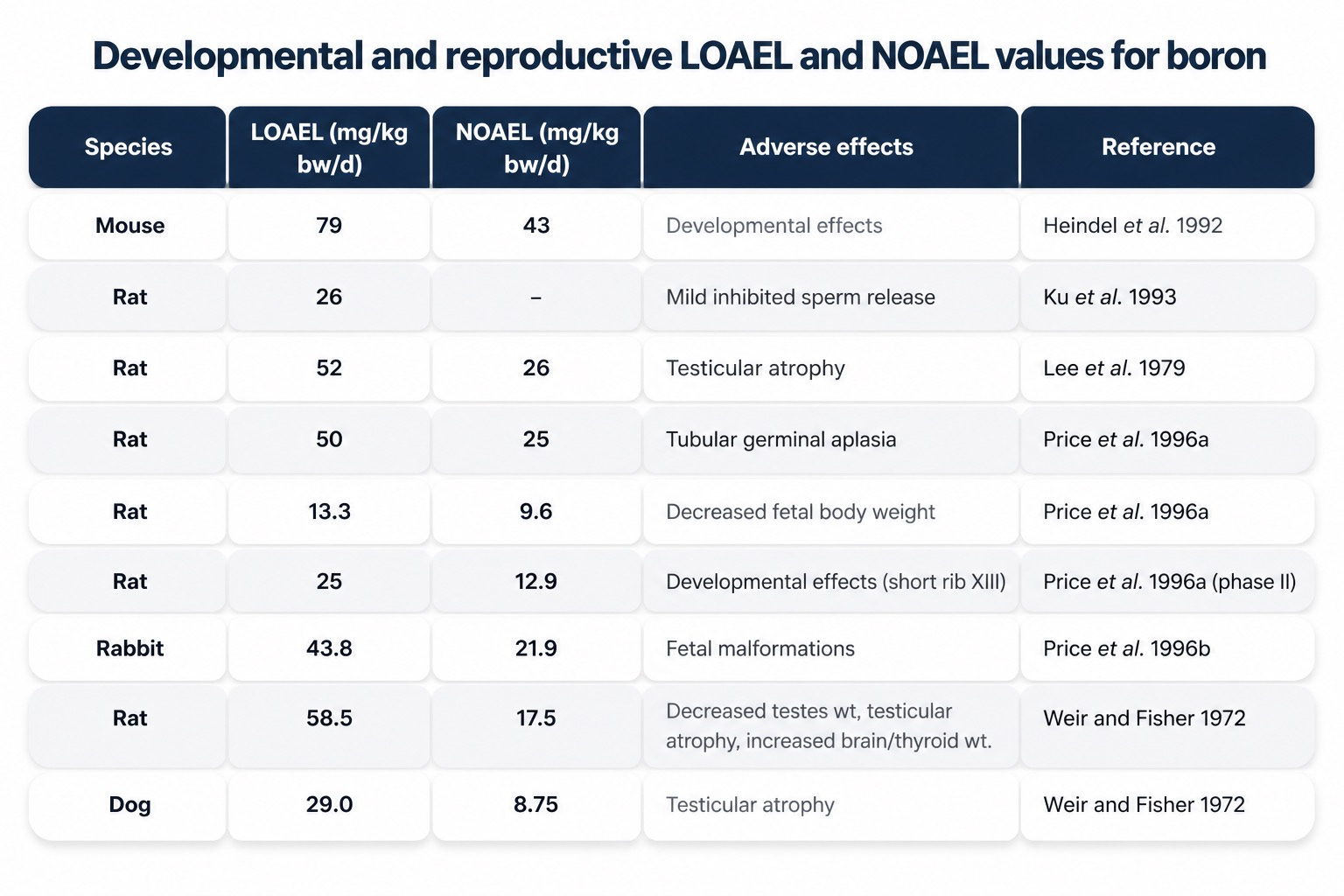
The step-by-step logic goes like this:
Step 1 – Animal dosing:
Researchers administered boric acid and other borates (including borax) to animals, primarily rats, across a range of oral doses to study toxicity. [3, 5]
Step 2 – Identify the NOAEL:
They then identified the highest dose that produced no observed adverse effects (NOAEL), focusing on sensitive endpoints like fetal weight, skeletal changes and reproductive abnormalities. [3, 4]
Step 3 – Convert to boron (and borax) equivalents:
In rat developmental studies, a key NOAEL was 55 mg boric acid/kg/day, which (boric acid is about 17.5% boron by weight) is equivalent to 9.6 mg boron/kg/day.
Using the same logic, and the EPA table value that borax is about 11.34% boron, this 9.6 mg boron/kg/day corresponds to about 85 mg borax/kg/day. [1, 3, 5, 7]
Step 4 – Apply uncertainty factors to reach a human UL:
To derive a human tolerable upper intake level (UL), the Food and Nutrition Board started from this 9.6 mg boron/kg/day rat NOAEL and applied a composite uncertainty factor of 30 (3× for rat‑to‑human extrapolation and 10× for human variability), yielding an adult UL of 20 mg boron/day. [3, 8]
EPA reference dose uses a different NOAEL and bigger factor:
Separately, EPA’s toxicological review selected a dog NOAEL of 8.8 mg boron/kg/day for testicular effects and applied a 100‑fold uncertainty factor (10× interspecies, 10× intraspecies) to derive its reference dose. [3]
Step 6 – Why human limits are far below animal doses:
Across these toxicology frameworks, the same conservative factors apply: regulators start from animal NOAELs expressed as elemental boron, convert if needed from boric acid or borax, and then divide by uncertainty factors of 30–100× to obtain human guidance levels, so the final human intake recommendations sit dozens to over a hundred times lower than the doses that produced no or first adverse effects in animals. [1, 3, 4]
All of this can be visualized in the following tables showing rodent NOAEL and the human conversion factors for elemental boron.
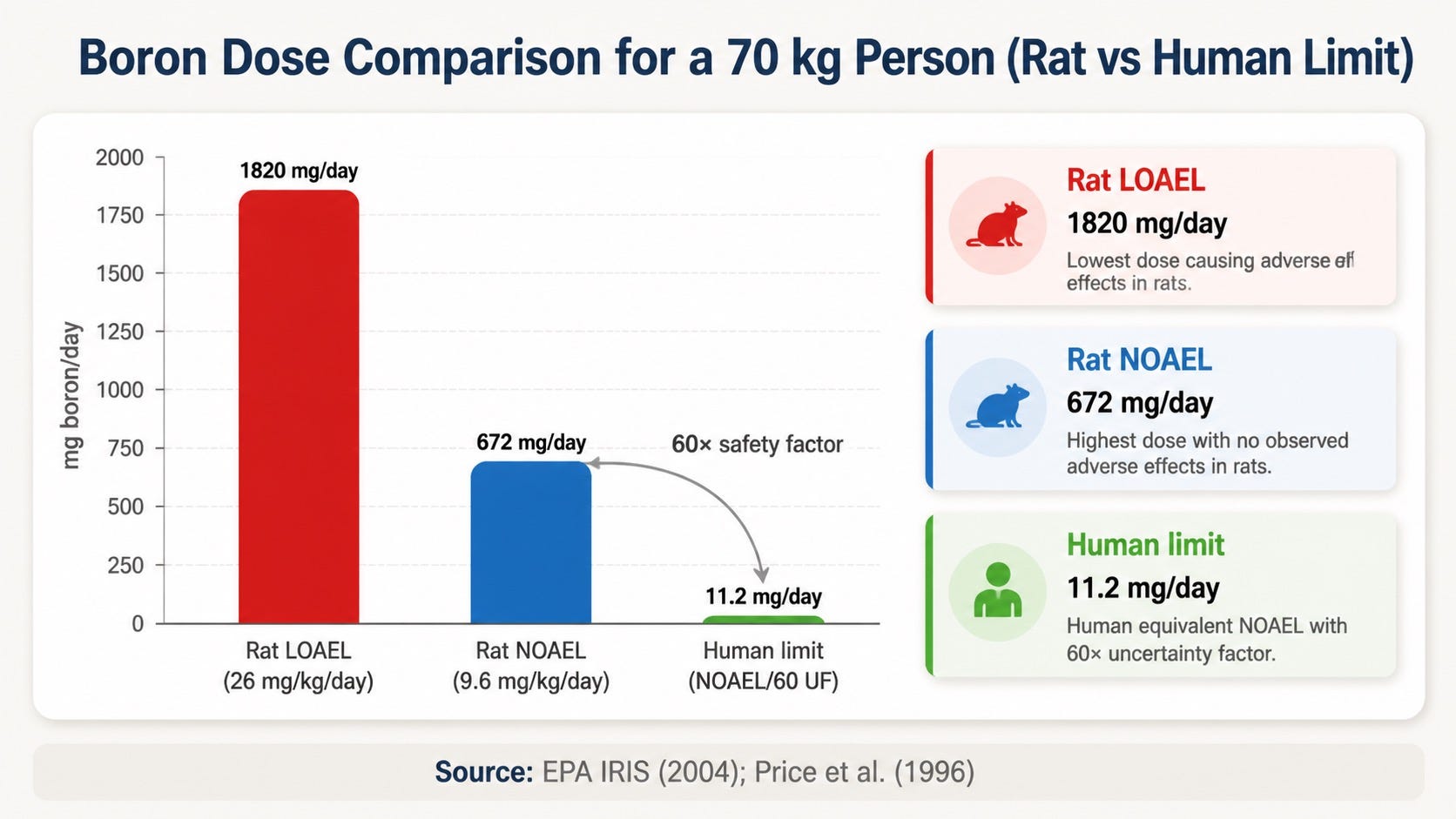
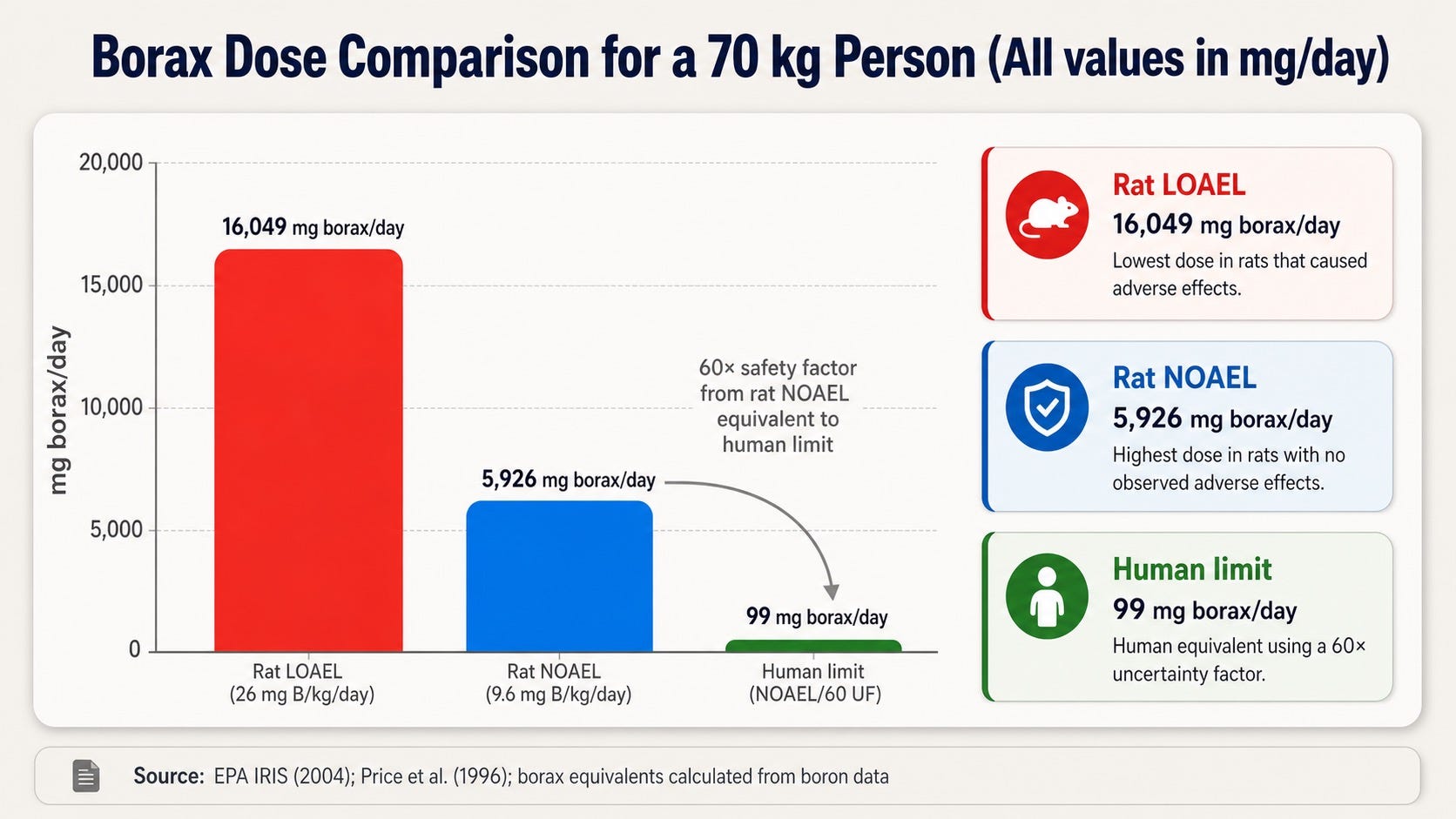
This is where the “huge reduction” point becomes clear. If the anchor point is about 9.6 mg boron/kg/day in rats, a 70 kg adult would reach that same body-weight-normalized intake at about 672 mg of boron per day. Yet the adult UL cited by EFSA from the Food and Nutrition Board is 20 mg/day, which is roughly 34-fold lower than that body-weight-scaled animal NOAEL before even discussing higher-dose adverse-effect levels. [1, 3, 7, 10]
And that is only the comparison to the no-effect level in the animal model. The doses that actually caused adverse findings in those rat studies were higher still, such as the LOAEL values above the NOAEL noted in the boron toxicology literature, so the gap between “human upper limit” and “animal harm level” becomes larger than the first comparison suggests. [3, 5]
People sometimes describe this as “exponential,” and while the mathematics here are technically multiplicative rather than exponential, the practical effect is the same for a lay reader: every adjustment step pushes the allowed human intake sharply downward. First, the study dose may be converted from boric acid or borax into elemental boron; next, the animal dose is normalized for body weight; then uncertainty factors are applied; and finally agencies may subtract background dietary exposure when making policy decisions for supplements or fortified foods. [1, 3, 7, 11]
That is how very large animal-study doses can eventually become a minuscule human adult intake limit. The published number is the end of a chain of conservative reductions, not a direct observation that 20 mg/day harms humans. [1, 3, 8]
Why the borax-versus-boron issue confuses people
A lot of confusion starts when readers compare unlike numbers. Some papers discuss boric acid doses, some discuss borax doses, and some report everything as elemental boron, but those are not interchangeable unless the conversion is shown.[1, 12]
The EPA table (see below) is useful here because it puts the percentages side by side. (See the green row in the table below) Boric acid is 17.48% boron and borax decahydrate is 11.34% boron, so boric acid delivers more boron per gram than borax does.[3]
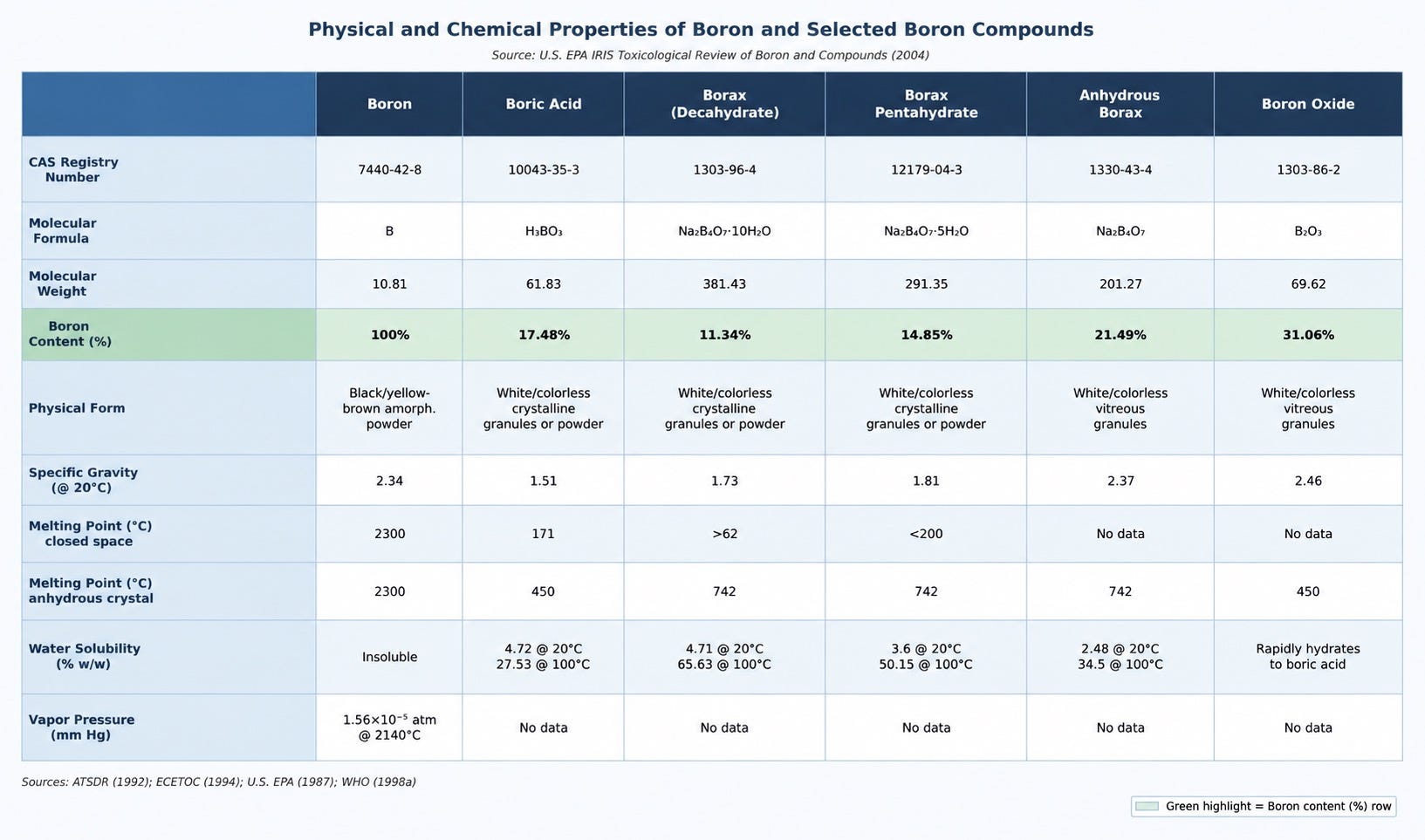
That means two equal-looking weights can represent very different actual boron exposure. A gram (1000 mg) of boric acid contains about 175 mg of boron, while a gram (1000 mg) of borax contains about 113 mg of boron. [3]
This also explains why regulatory summaries often say that boric acid, borax, and related borates are expected to have similar toxicity when compared on a boron-equivalent basis. The EPA review states that, at physiological pH, these compounds are expected to produce similar toxicity based on boron equivalents, because inorganic borates are present in the body primarily as boric acid. [3]
So the chemically accurate way to compare studies is not by raw powder weight alone, but by the amount of elemental boron being delivered. Without that step, it is easy to overstate or understate the exposure by a wide margin. [13]
Is borax a “poison”?
This is where language often does more harm than clarity. Regulators use hazard-based labels for real reasons, but ordinary readers often hear the word “poison” and imagine that any amount is inherently dangerous, which is not how toxicology works.
A basic principle of toxicology, going back to Paracelsus, is that the dose makes the poison. In other words, toxicity depends on how much is taken in, by what route, and over what time period, not just on the identity of the substance. Even water is toxic if you take too much.
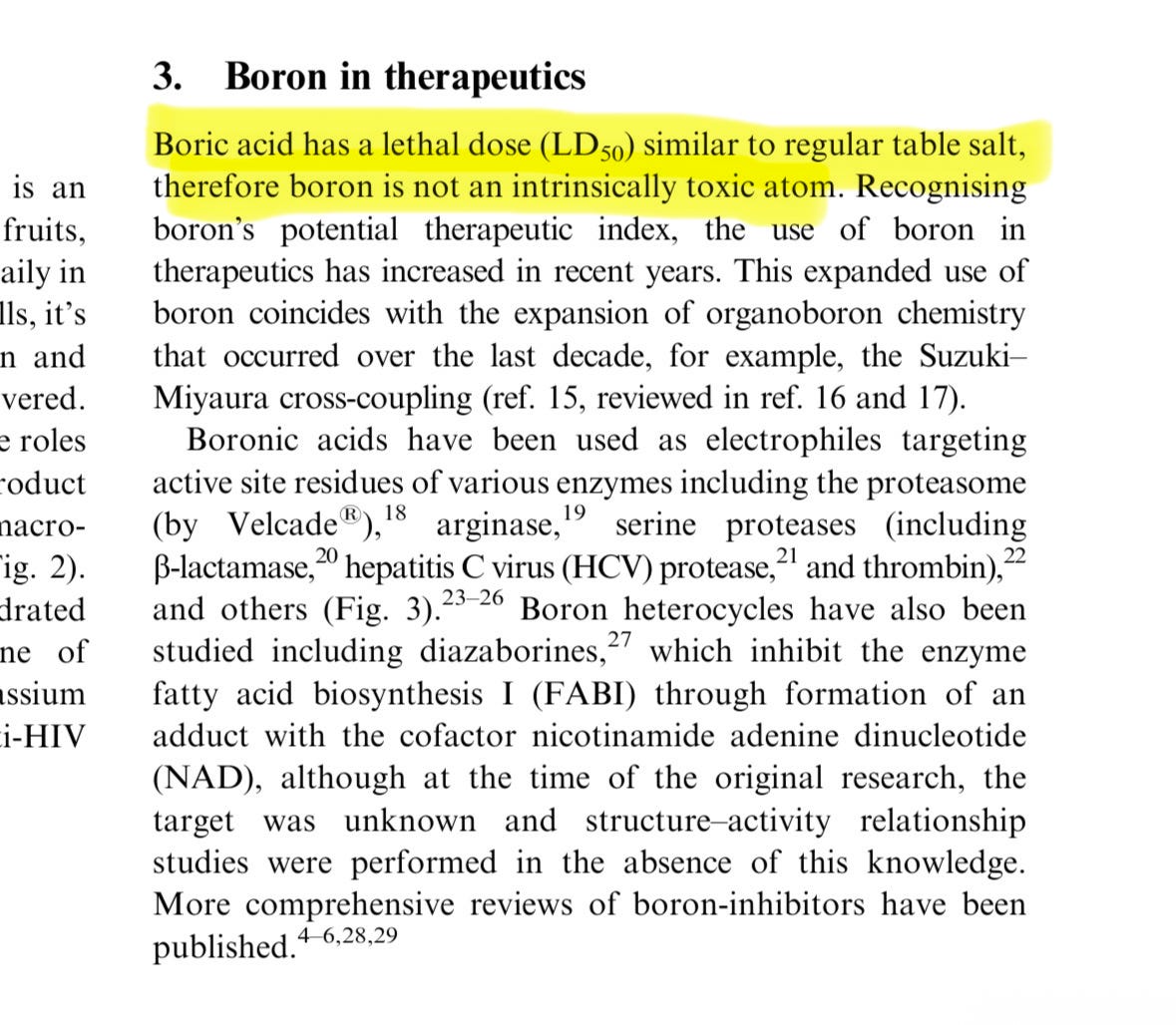
That principle applies to borates, but it does not mean the concerns are imaginary. Public-health sources note that boric acid and borate salts have minimal toxicity compared with many truly high-toxicity poisons, yet they are still treated cautiously because animal studies found reproductive and developmental effects at sufficiently very high chronic exposures. As a fairly close comparison, borax falls relatively close in acute toxicity to common table salt. [3, 5, 7, 14]
What the boron number really means
The adult boron/borax upper intake level is best understood as a extreme cautious policy number, not a cliff edge and not a direct reading of human toxicity. It is the product of animal data, compound-to-boron conversion, body-weight scaling, and uncertainty factors that push the final figure far below the doses that caused trouble in rodents or other animals. [1, 4, 8]
This does not mean borax should be indiscriminately consumed, and it does not dismiss the real regulatory concerns about its widespread use as a food preservative in the early 1900s. What it does show is that to understand boron properly, you need to keep three things in mind: the form used in a study, how much actual boron it provides, and the built-in safety margins used to set human intake limits. [1, 5, 7]
If those three pieces are ignored, the discussion collapses into slogans from either side of the argument. If they are kept in view, the process becomes much easier to understand: boric acid or borax went into the animal studies, elemental boron was the relevant comparison unit, and the final daily upper intake for humans was obtained by applying very conservative reductions to keep people well below the animal exposure range associated with adverse effects.
Conclusion
Government agencies have been clear that borax and other borate salts are not to be used as food ingredients or consumed as foods, and they have built their rules so that these compounds are effectively excluded from intentional oral use in the food supply. This is in spite of the fact that many clinical trials in both humans and animals have used borax and other boron salts safely, and effectively. [15]
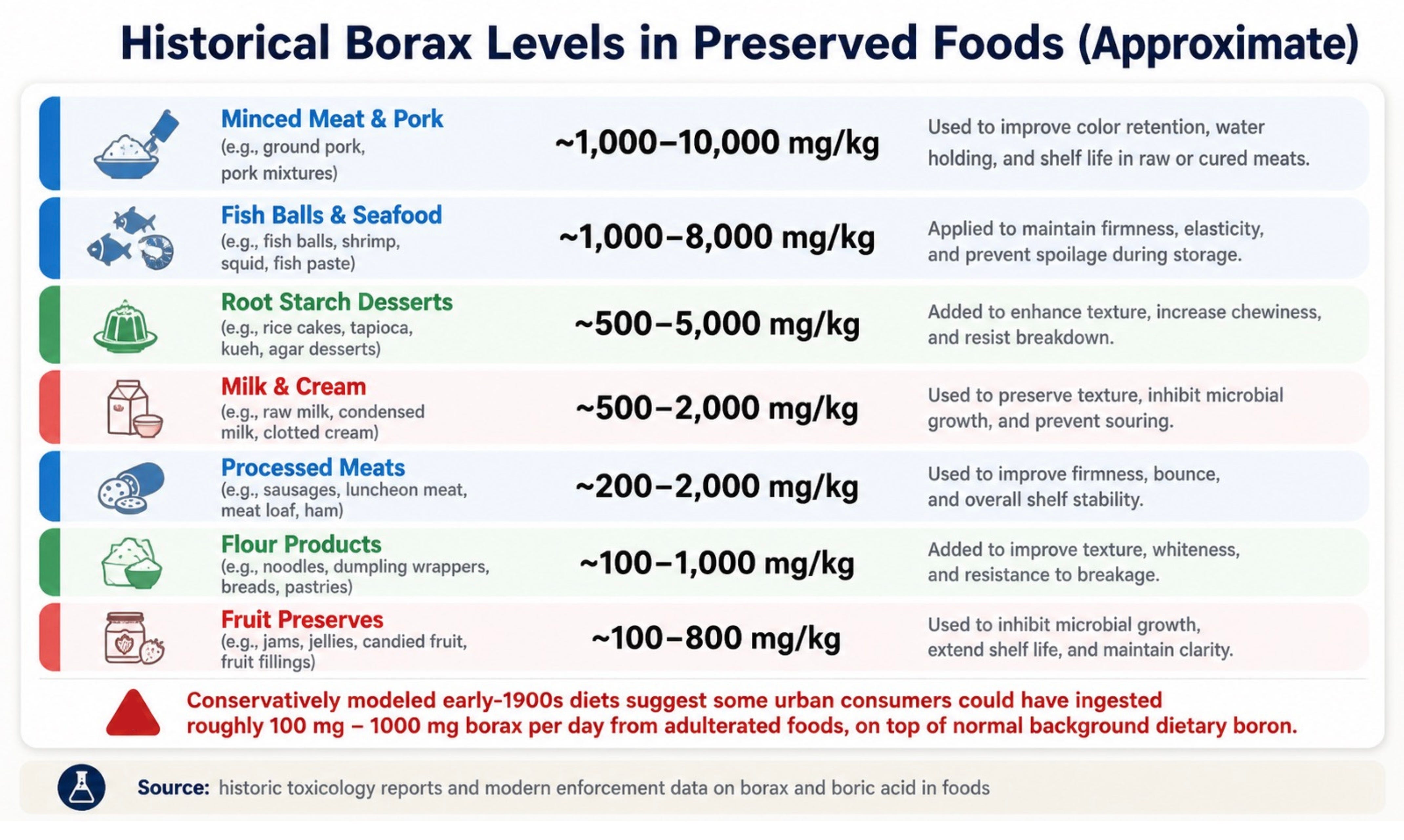
These positions reflect a policy choice: borax is treated as an industrial and pesticide chemical rather than a compound that provides an essential trace mineral, and modern food regulations are structured to prevent any form of borax from being added to food, even though earlier in the twentieth century, borax was used extensively as a food preservative without any obvious widespread human toxicity (see table below). [16, 17]
In contrast, toxicology, experimental, and nutrition data show that small oral doses of borax, a boron‑containing compound, are safe; and that human guidance values such as the adult upper intake level for boron were derived from high‑dose animal studies with large safety factors layered on top.
Several expert groups generally agree that a safe daily boron intake for adults falls within a low milligram range of about 3–20 mg, depending on body weight and the safety margins used. Human studies looking at potential benefits of boron consistently report that positive effects on bone, brain, or inflammatory markers only begin to appear at intakes of at least about 3 mg of boron per day, typically from diet plus supplements or from specific boron compounds such as borax and boric acid. [1, 11, 15, 16, 17]
When daily boron intake is raised from very low levels into at least the low‑milligram range (around 3 mg per day or more), studies in animals and humans report a wide range of benefits [15, 18, 19, 20, 21]. These include stronger bones and better mineral balance [15, 18, 19, 20, 21], sharper thinking and brain function, healthier hormone activity [15, 18, 19, 22, 23, 24, 25], better wound healing and immune responses [15, 26, 27, 28], improvements in cholesterol and other blood fats (often with better weight‑related markers), and early signs that higher boron or certain boron compounds may help lower cancer risk or slow cancer cell growth [15, 18, 29, 30, 31, 32].
In light of the facts presented in this article, a daily intake range of 3–20 mg of elemental boron (approximately 26–180 mg of borax per day) is a reasonable target for optimizing human health. A substantial body of controlled animal data shows benefits at intakes above the 20 mg UL, and continued research is needed to more precisely determine the optimal range in which humans can experience improved health, vitality, and longevity.
References
1. European Food Safety Authority (EFSA) Panel on Dietetic Products, Nutrition and Allergies. (2004). Tolerable upper intake level of boron (sodium borate and boric acid). EFSA Journal, 2(80), 1–22. https://efsa.onlinelibrary.wiley.com/doi/pdf/10.2903/j.efsa.2004.80
2. U.S. Borax. (2024). FDA status. https://www.borax.com/customer-support/product-stewardship/fda-status
3. U.S. Environmental Protection Agency (EPA). (2004). Toxicological review of boron and compounds (CASRN 7440-42-8). Integrated Risk Information System (IRIS). https://iris.epa.gov/static/pdfs/0410tr.pdf
4. U.S. Environmental Protection Agency (EPA). (2003). Drinking water health advisory for boron. EPA Office of Water. https://www.epa.gov/sites/default/files/2014-09/documents/drinking_water_health_advisory_for_boron.pdf
5. European Centre for Ecotoxicology and Toxicology of Chemicals (ECETOC). (1995). Reproductive and general toxicology of some inorganic borates and risk assessment for human beings* (Technical Report No. 63). https://www.ecetoc.org/publication/tr-063-reproductive-and-general-toxicology-of-some-inorganic-borates-and-risk-assessment-for-human-beings/
6. 20 Mule Team Borax. (2026). Borax vs. boric acid. https://www.20muleteamlaundry.com/compare/borax-vs-boric-acid.html
7. European Medicines Agency (EMA). (2021). Questions and answers on boric acid and borates used as excipients in medicinal products for human use (Rev. 1). https://www.ema.europa.eu/en/documents/scientific-guideline/questions-and-answers-boric-acid-and-borates-used-excipients-medicinal-products-human-use-rev1_en.pdf
8. Institute of Medicine, Food and Nutrition Board. (2001). Dietary reference intakes for vitamin A, vitamin K, arsenic, boron, chromium, copper, iodine, iron, manganese, molybdenum, nickel, silicon, vanadium, and zinc: A model for the development of tolerable upper intake levels. National Academies Press. https://www.ncbi.nlm.nih.gov/books/NBK222320/
9. Scientific Committee on Consumer Safety (SCCS). (2010). Opinion of the Scientific Committee on Consumer Safety on boron compounds (SCCS/1249/10). European Commission. https://ec.europa.eu/health/scientific_committees/consumer_safety/docs/sccs_o_027.pdf
10. Health Canada. (2023). Guidelines for Canadian drinking water quality: Guideline technical document – Boron: Exposure considerations. Government of Canada. Link to article
11. German Federal Institute for Risk Assessment (BfR). (n.d.). Proposed maximum levels for the addition of boron to foods including food supplements. https://www.microco.info/cm/349/proposed-maximum-levels-for-the-addition-of-boron-to-foods-including-food-supplements.pdf
12. Moore JA. An assessment of boric acid and borax using the IEHR Evaluative Process for Assessing Human Developmental and Reproductive Toxicity of Agents. Expert Scientific Committee. Reprod Toxicol. 1997 Jan-Feb;11(1):123-60. https://pubmed.ncbi.nlm.nih.gov/9138630/
13. Health Canada & Environment and Climate Change Canada. (2025). Updated draft assessment: Boric acid, its salts and its precursors. https://www.canada.ca/en/environment-climate-change/services/evaluating-existing-substances/updated-draft-assessment-boric-acid-salts-precursors.html
14. National Pesticide Information Center (NPIC). (n.d.). Boric acid technical fact sheet. Oregon State University. https://npic.orst.edu/factsheets/archive/borictech.html
15. Pizzorno, L. (2015). Nothing boring about boron. Integrative Medicine (Encinitas), 14(4), 35–48. https://www.ncbi.nlm.nih.gov/pmc/articles/PMC4712861/
16 . Dinca, L., & Scorei, R. (2013). Boron in human nutrition and its regulations use. Journal of Nutritional Therapeutics, 2(1), 22–29. https://pdfs.semanticscholar.org/066d/7d2009fb55a350a96716ffa20dec39e15c53.pdf
17. Nielsen FH, Eckhert CD. Boron. Adv Nutr. 2020 Mar 1;11(2):461-462. https://pmc.ncbi.nlm.nih.gov/articles/PMC7442337/
18. Nielsen, F. H., & Meacham, S. L. (2011). Growing evidence for human health benefits of boron. Journal of Evidence-Based Complementary & Alternative Medicine, 16(3), 169–180. https://journals.sagepub.com/doi/10.1177/2156587211407638
19. National Institutes of Health, Office of Dietary Supplements. (2026). Boron – Fact sheet for health professionals.
https://ods.od.nih.gov/factsheets/Boron-HealthProfessional/
20. Health Canada. (2007). Boron as a medicinal ingredient in oral natural health products.
21. Czauderna, M., Kowalczyk, J., Marounek, M., & Wąsowska, I. (2019). Selected physiological effects of boron compounds for animals and humans: A review. Journal of Animal and Feed Sciences, 28(4), 307–320. https://doi.org/10.22358/jafs/114546/2019
22. Penland, J. G. (1994). Dietary boron, brain function, and cognitive performance. Environmental Health Perspectives, 102(Suppl 7), 65–72.
https://pubmed.ncbi.nlm.nih.gov/7889884/
23. Penland, J. G. (1998). The importance of boron nutrition for brain and psychological function. Biological Trace Element Research, 66(1–3), 299–317.
https://www.ars.usda.gov/research/publications/publication/?seqNo115=95480
24. Nielsen, F. H., Hunt, C. D., Mullen, L. M., & Hunt, J. R. (1987). Effect of dietary boron on mineral, estrogen, and testosterone metabolism in postmenopausal women. FASEB Journal, 1(5), 394–397.
https://pubmed.ncbi.nlm.nih.gov/3678698/
25. Nielsen, F. H. (2009). Update on human health effects of boron. Journal of Trace Elements in Medicine and Biology, 23(3), 195–197.
https://www.sciencedirect.com/science/article/abs/pii/S0946672X1400128X
26. Demirci S, et al. Boron promotes streptozotocin-induced diabetic wound healing: roles in cell proliferation and migration, growth factor expression, and inflammation. Mol Cell Biochem. 2016 Jun;417(1-2):119-33. https://pubmed.ncbi.nlm.nih.gov/27206737/
27. Sedighi-Pirsaraei N, et al. Boron in wound healing: a comprehensive investigation of its diverse mechanisms. Front Bioeng Biotechnol. 2024 Oct 30;12:1475584.
https://pubmed.ncbi.nlm.nih.gov/39539690/
28. Şahin F, et al. The effect of the boron-based gel on the treatment of diabetic foot ulcers: A prospective, randomized controlled trial. J Trace Elem Med Biol. 2023 Sep;79:127261. Link to paper.
29. Kuru R, Yilmaz S, Balan G, Tuzuner BA, Tasli PN, Akyuz S, Yener Ozturk F, Altuntas Y, Yarat A, Sahin F. Boron-rich diet may regulate blood lipid profile and prevent obesity: A non-drug and self-controlled clinical trial. J Trace Elem Med Biol. 2019 Jul;54:191-198. https://pubmed.ncbi.nlm.nih.gov/31109611/
30. Mahabir, S., et al. (2008). Dietary boron and hormone replacement therapy as risk factors for lung cancer in women. American Journal of Epidemiology, 167(9), 1070–1080.
https://academic.oup.com/aje/article/167/9/1070/113513
31. Barranco, W. T., & Eckhert, C. D. (2007). Evaluation of ecological and in vitro effects of boron on prostate cancer risk. Cancer Causes & Control, 18(7), 783–790.
https://pubmed.ncbi.nlm.nih.gov/17186423/
32. Gallardo‑Williams, M. T., Chapin, R. E., King, P. E., et al. (2004). Boron supplementation inhibits the growth and local expression of IGF‑1 in human prostate adenocarcinoma (LNCaP) tumors in nude mice. Toxicologic Pathology, 32(1), 73–78. https://pubmed.ncbi.nlm.nih.gov/14713551/
A small little pinch of original BORAX per day is all you need. Been doing it for years, and the only side effect is it seems to have really helped the arthritis in my fingers/hands.
A pinch of 20 Mule Team in my freshly ground morning cuppa java hasn't harmed me any. At least not yet.
68 years old. Unjabbed. On zero prescriptions. So far so good. 😉
Thank you for being curious, outlier. ❤️