
Make Your Own Personal Space BioShield:
A Personal Chlorine Dioxide Air Defense System

Note #1: This is for educational purposes. This is not medical advice, and I am not telling you what you should do. Every person is or should be in control of their own health in spite of what the current medical establishment would like you to believe.
Note #2: You are about to read an article about making your own chlorine dioxide personal airspace defense system. These systems were banned from the United States during the so-called Covid pandemic. They cannot be sold due to legal restrictions placed on chlorine dioxide, but you can safely and legally make your own if you wish. The article below is for educational purposes and will teach you how.
Introduction: Down the Rabbit Hole
Over the past eight years, my work helping people learn about chlorine dioxide has focused almost exclusively on internal and topical applications. One area I have consistently neglected is the use of chlorine dioxide in the surrounding environment as a continuous, passive defense against viruses, mold, bacteria, allergens, and airborne toxins.
My main reason for overlooking this application comes down to one of chlorine dioxide’s defining characteristics: once activated, it is rapidly consumed. For a long time, I was simply not aware of a easy, yet effective DIY method for extending its release in a way that could maintain meaningful concentrations around a person over an extended period.
That changed about a week ago. What followed was a weeks long deep dive and this article is the culmination of that dive. It is long overdue.
It started with a review of a commercial product that has been suspiciously banned in the United States, a small badge worn on a lanyard, sold in Japan, that quietly off-gasses trace amounts of chlorine dioxide (ClO₂) gas to create a disinfected personal microenvironment. I could not find much information about the Japanese product; however, Safrax, Inc. produces a similar product used for room disinfection and odor control. The concept was elegant, the science was real, and the question immediately became: can this be made at home and does it work?
My first instinct was to go deep on the carrier material, the substrate that holds the active sodium chlorite (NaClO₂) and releases it slowly over time. That led to zeolite, the porous volcanic mineral used in the original commercial manufacturing process of this Japanese and Safrax product. Zeolite has extraordinary surface area and well-documented ion exchange properties which are ideal for absorbing a sodium chlorite solution and releasing it slowly. The process is real, it works, and it produces professional-grade results. It is also complex: washing, roasting at 400–600°C, vacuum drying, controlled impregnation baths, and specialized handling.
From zeolite, the path led naturally to silica gel beads, more accessible, available on Amazon, and capable of absorbing a sodium chlorite solution in a similar fashion. I developed a full DIY protocol around this approach: cook the beads at 150°C, soak overnight in a NaClO₂ solution, low-temperature dry at 65–70°C, and fill into mylar bags. It works, but it is still a multi-step, multi-hour process, and it produces a badge with an estimated lifespan of 7–14 days.
And then came Occam’s Razor.
A search of the FDA’s DailyMed database turned up the full ingredient label for PURE O2 Pack-Solid, a South Korean-made, FDA-registered ClO₂ badge that is commercially validated and rated for 60 days of continuous release. Its entire formulation is sodium chlorite, citric acid monohydrate, and sodium bisulfate, with no carrier material listed. [1]
With one additional ingredient, fumed silica powder, added as a flow agent and micro-moisture buffer, the DIY formula becomes a four-ingredient dry powder blend that can be mixed and bagged in under 15 minutes. That is where this journey ends up, and that is what this guide is about.
What follows covers the peer-reviewed science establishing that ultra-low ClO₂ concentrations genuinely work against pathogens, a review of the commercial products that have validated this concept in the marketplace, and a complete step-by-step DIY build guide, including how to scale the formula from a personal wearable badge up to a whole-room passive disinfection pouch. [1, 2, 3, 4]
Section 1 — The Science: Ultra-Low Concentrations That Actually Work
The most important thing to understand about chlorine dioxide as an air disinfectant is that the concentrations required for meaningful pathogen inactivation are extraordinarily low, far below what most people imagine when they hear the word disinfectant, and well below established safety thresholds for human exposure. [2, 3, 5]
The Ogata Classroom Study (2009)
The landmark paper in this field is a deceptively simple study published by Ogata in 2009. The researcher placed a ClO₂ gas-generating agent in elementary school classrooms in Japan, maintaining a measured ambient concentration of just 0.01 ppm, and classrooms with the agent had absenteeism of 1.5% versus 4.0% in classrooms without it, a 62.5% reduction in sick days, with a highly significant result of p < 0.00001. [5]
This study is the foundation of the personal badge concept because it demonstrates that 0.01 ppm, a concentration achievable by a small passive off-gassing pouch, is sufficient to produce a measurable protective effect in occupied real-world spaces. [5]
Mouse Influenza Model: Ogata & Shibata (2008)
Ogata and Shibata published an animal study in the Journal of General Virology exposing mice to aerosolized influenza virus while housed in a 0.03 ppm ClO₂ environment. Compared with control animals in ambient air, the ClO₂-exposed mice showed reduced lung viral titers and improved survival, supporting the idea that low-level ClO₂ can inactivate influenza before infection becomes established. [6]
Surface Inactivation Study: Morino et al. (2011)
Morino and colleagues tested 0.05 ppmv ClO₂ against four organisms under wet surface conditions and reported strong reductions across both viruses and bacteria.[3]
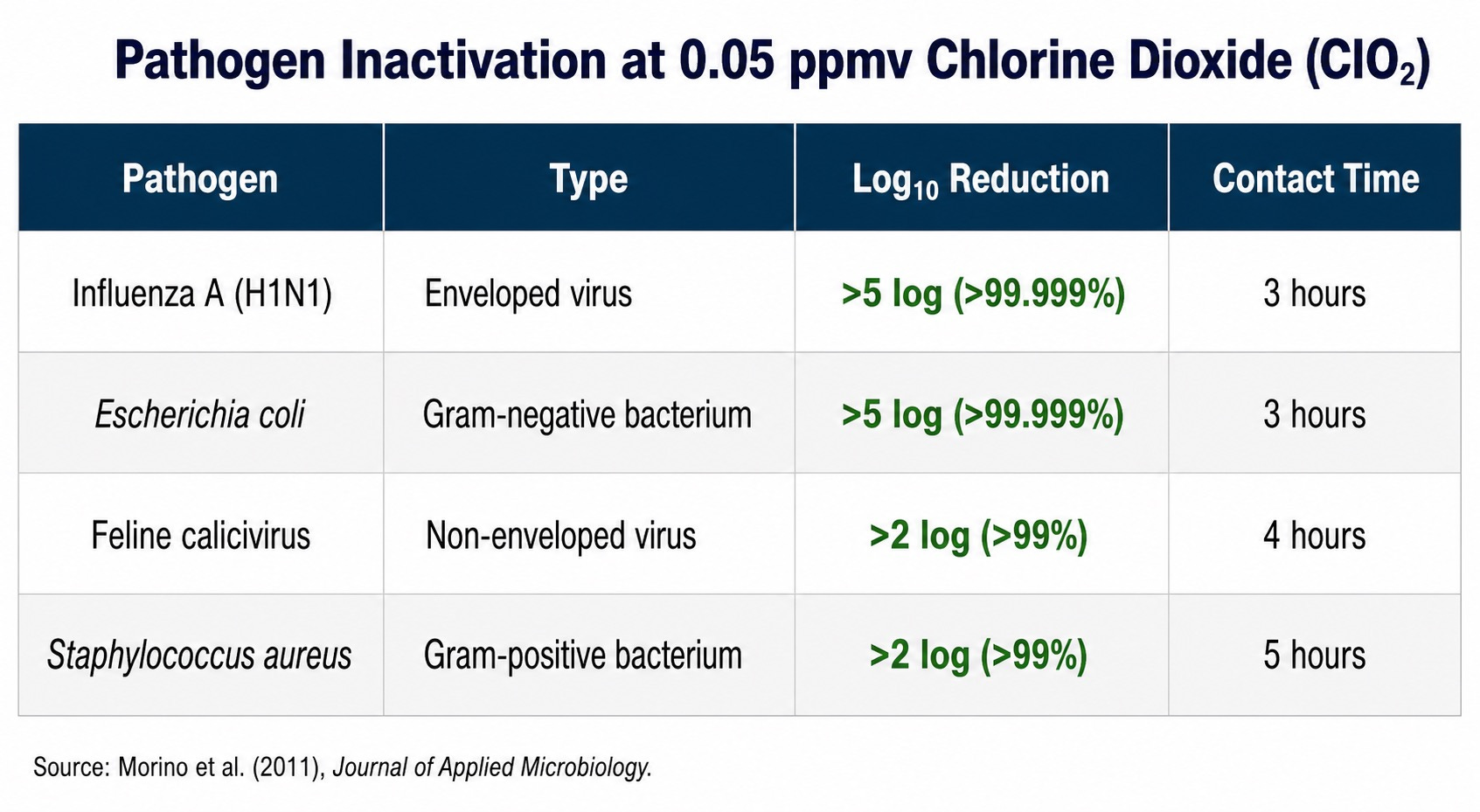
The feline calicivirus result is especially important because non-enveloped viruses are among the hardest pathogens to inactivate, yet even they were reduced at 0.05 ppm, a concentration still below the OSHA 8-hour exposure limit. [3, 5]
Hospital Operating Room Study: Morino et al. (2016)
A later study in Pharmacology moved from lab conditions into a real clinical environment. With a ClO₂-generating agent maintaining 0.03 ppm in a hospital operating room, airborne viable bacteria counts fell from 66.8 CFU/m³ to 10.9 CFU/m³, an 84% reduction that was statistically significant at p < 0.001. [4]
The authors concluded that continuous ClO₂ exposure at or below 0.03 ppm can substantially reduce airborne microbes in occupied clinical settings without harmful human effects. [4]
Seirogan Research Program
Seirogan Co. has published a research summary indicating that 0.03 ppm is an effective threshold for continuous air disinfection and that 0.1 ppm is effective for surface inactivation across multiple organisms. Their program adds continuity to the evidence base by connecting laboratory findings, environmental use, and product development around the same low-concentration window. [2]
2026: High-Pathogenicity Avian Influenza
A study published in January 2026 evaluated low-concentration gaseous ClO₂ against H5 highly pathogenic avian influenza virus and reported significant inactivation at low gas-phase concentrations. That extends the evidence base to a currently important influenza threat and shows the low-dose ClO₂ concept is still being actively studied. [7]
Putting It in Context: OSHA Safety Limits
OSHA and NIOSH provide the regulatory frame for understanding how these efficacy concentrations compare to established safety ceilings. [8, 9]
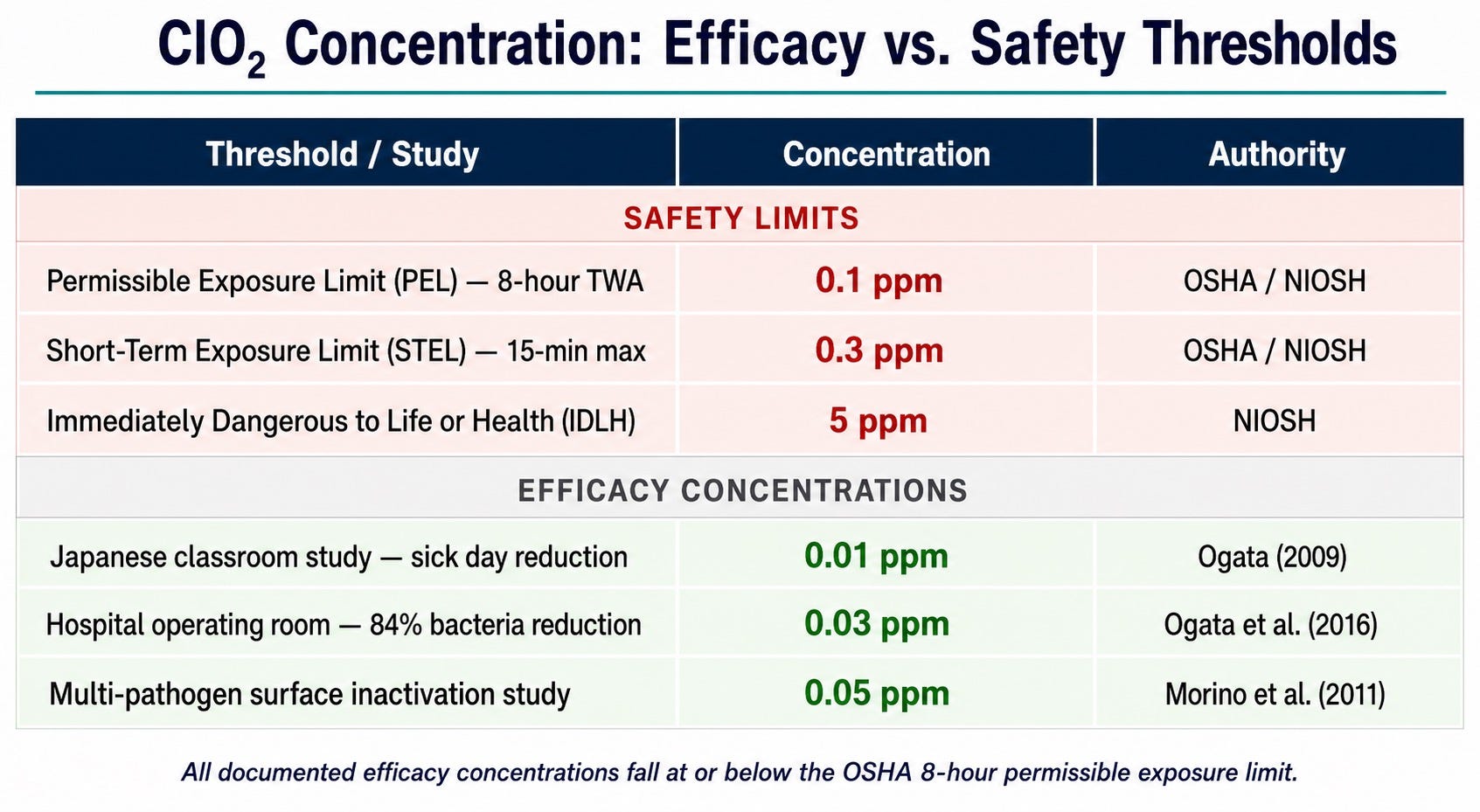
The overall picture is consistent: the main efficacy window for passive ClO₂ air disinfection, 0.01–0.05 ppm, sits at roughly 2–10 times below OSHA’s 8-hour permissible exposure limit of 0.1 ppm. The 2023 Journal of Water and Health study on personal ClO₂ products also concluded that very low ClO₂ gas concentrations below 0.1 ppm are not expected to cause harmful effects in humans.[2, 3, 9, 10]
Section 2 — Commercial Products: Proof of Concept Already Exists
Before building a DIY version, it helps to understand what has already been engineered and marketed. In the case of personal ClO₂ badges and passive room pouches, there is already a substantial commercial landscape, especially in Asia and in specialty odor-control markets.[1, 4]
PURE O2 Pack-Solid (South Korea)
PURE O2 Pack-Solid is manufactured by Pure O2 Co., Ltd. in South Korea and is listed on DailyMed as PURE O2 PACK-SOLID — sodium chlorite powder under NDC 75124-0002-1. The company site presents it as a disinfectant/deodorizer product and highlights regulatory and testing claims including CE marking and other certifications. [1]
The most useful part for DIY research is the disclosed formulation: [1]
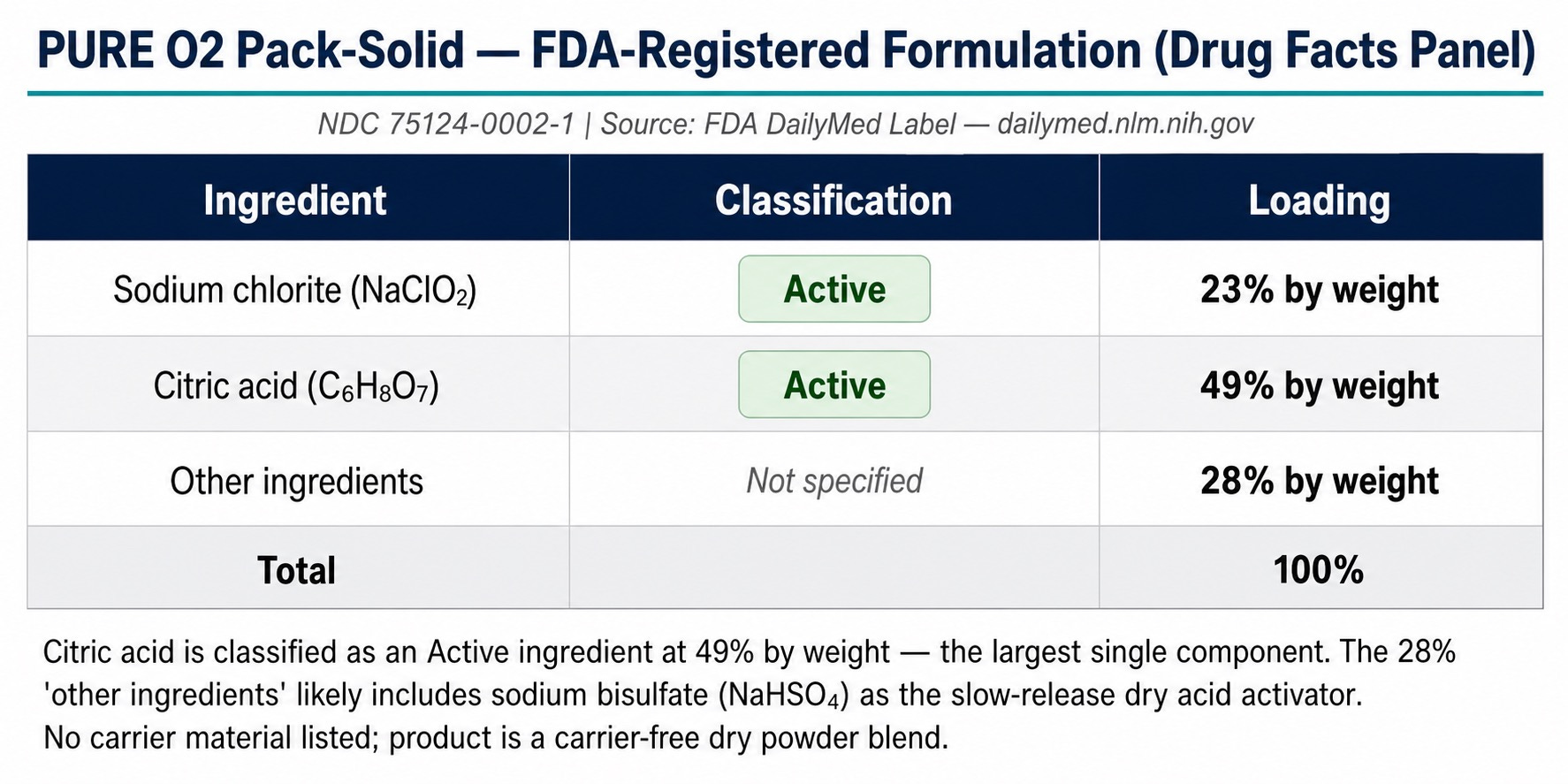
There is no silica gel or zeolite carrier listed on the FDA label, which means the product is a carrier-free powder blend sealed in a foil pouch. Each pouch contains 4 g of powder, which works out to about 0.92 g active NaClO₂ per badge at 23% loading. [1]
This matters because it shows a commercially validated product can be made from a dry powder system without any porous bead carrier at all. [1]
Safrax ClO₂ Slow-Release Products
Safrax markets slow-release ClO₂ odor-control pouches for enclosed spaces such as rooms, closets, cars, bathrooms, and storage areas. Their product materials position these pouches as passive, continuous-release systems for deodorization and air treatment over extended periods rather than as short, high-dose fumigation devices. [4]
Safrax is especially relevant because it demonstrates the room-scale application of the same general chemistry used in a badge format. Their product line effectively bridges the gap between a wearable personal-space badge and a static pouch intended for a room, vehicle, or closet. [4]
Toamit “Virus Shut Out” (Japan)
Toamit’s Virus Shut Out is one of the best-known Japanese wearable ClO₂ badge products and is the device that brought the category into broad public view during the COVID-19 period. Earlier thread research established that it uses a zeolite-based carrier system with sodium chlorite impregnation and is typically rated for around 30 days of use.[11]
In the United States, the EPA treated Virus Shut Out as an unregistered pesticide because products claiming to kill viruses fall under pesticide law and require EPA registration before sale. EPA and related enforcement actions also led to marketplace removals and seizures during the pandemic period.[12]
A 2023 Journal of Water and Health paper evaluating portable personal ClO₂ products found that release in ambient air may be too low for reliable broad-area disinfection outdoors, but this does not rule out usefulness in a microenvironment near the wearer or in smaller enclosed spaces like enclosed indoor spaces and aircraft. [10]
The Dual Use Case
Taken together, these products support two main applications: [1, 4, 10]
- Personal wearable badge: worn at chest level to create a low-level disinfecting zone near the face and breathing zone. [1, 10]
- Passive room pouch: placed in a room, vehicle, or enclosed area to maintain a low continuous background ClO₂ concentration over time.[4, 10]
Both applications are built around the same low-concentration idea established in the literature: not fumigation, but a steady background concentration in the 0.01–0.05 ppm range. [2, 3, 7]
Section 3 — The DIY BioShield Badge: Complete Build Guide
The DIY BioShield Badge described here is a four-ingredient dry powder blend sealed inside a breathable polypropylene (PP) nonwoven inner sachet, which is then sealed inside a mylar foil outer pouch. The two-layer design gives the badge a significant practical advantage over a single-bag approach: if the outer mylar bag is torn, cut open, or the badge is removed from the lanyard, the inner PP sachet contains the reactive powder and prevents direct skin or clothing contact with the blend. The design is modeled on the carrier-free PURE O2 Pack-Solid concept, with the addition of fumed silica as a flow agent and moisture-buffering aid. [1]
3A — How It Works: The Chemistry in Plain Language
Sodium chlorite (NaClO₂) is the active precursor. In dry form it is comparatively stable, but in the presence of acid and moisture it can generate chlorine dioxide gas.[1]
Citric acid monohydrate acts as a secondary acid component in the PURE O2 formula and likely helps shape the release curve together with sodium bisulfate. Using citric acid alone may work, but the commercial formula suggests the two-acid approach is part of what gives the badge a longer and smoother release profile. [1]
Sodium bisulfate (NaHSO₄) is a dry acid salt that absorbs ambient moisture and releases hydrogen ions gradually, helping create a slow, sustained acidification process rather than a rapid one-time reaction. This makes it useful as a controlled dry activator in a passive-release pouch concept derived from the PURE O2 formulation. [1]
Fumed silica is not listed in PURE O2, but as a practical DIY addition it can improve powder flow, reduce clumping, and help buffer moisture distribution within the powder bed. It is not the same thing as silica gel beads; it is a very fine powder used as an anti-caking and rheology aid.
The polypropylene (PP) nonwoven inner sachet is the spill-containment layer. Once the outer mylar is opened and ambient humidity begins the reaction, the PP sachet becomes the primary gas-release membrane. Because spunbond PP is fully gas-permeable, ClO₂ escapes freely through the fiber matrix. Because PP has a water absorption rate of only ~0.01%, the sachet resists liquid moisture while remaining open to gas flow. It is not a barrier layer, it is a physical containment layer that prevents the powder blend from being a contact hazard.
The foil mylar pouch is essential because it excludes moisture during storage and then becomes the release-control housing once opened. In effect, the bag is part of the reactor design.
3B — Materials and Shopping List
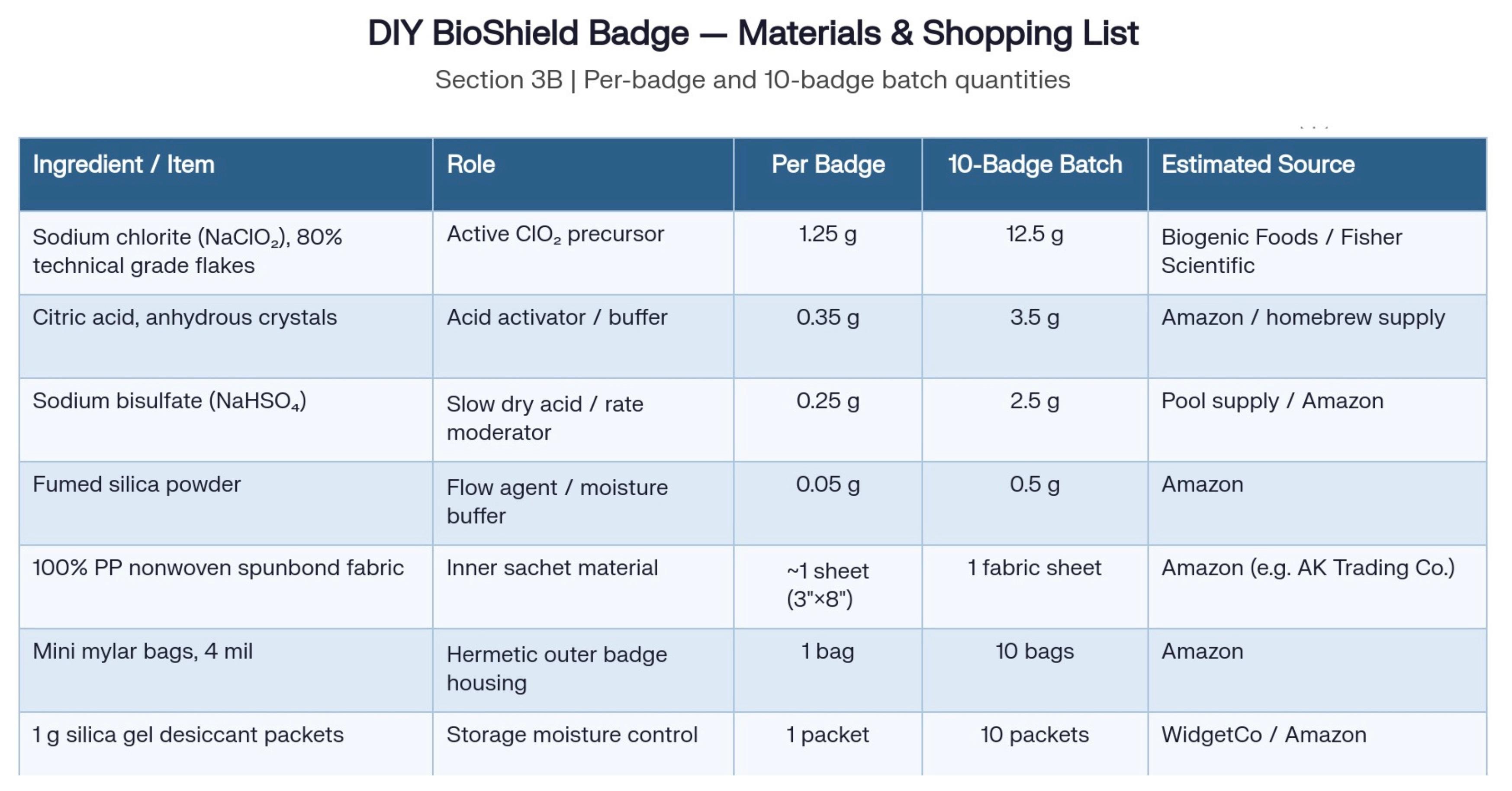
Estimated first-batch cost was previously projected at about $40–45, with enough leftover material for many future batches.
My Shopping List
Note from curious: I do not sell anything and I do not get any commissions off of links to things that are for sale. The only renumeration that I receive is from generous paid subscribers that support my work and ministry.
3C — Step-by-Step Instructions
⚠️ This section describes handling an oxidizer-acid powder system. Work dry, avoid dust, and do not add liquid water at any point.
Step 1: Prepare the workspace
Work outdoors or in a very well-ventilated area.
Wear nitrile gloves and safety glasses.
Pre-weigh each ingredient separately before combining anything.
Step 2: Prepare the inner polypropylene sachets
Cut the polypropylene non-woven fabric into rectangles approximately 3” × 8”.
Fold each rectangle in half to form a 3” × 4” pocket.
Using a clothes iron on a medium-high, dry (no steam) setting, heat-seal two of the three open edges by pressing firmly for 3–5 seconds per pass, creating an open-top pocket.
Allow the sachets to cool completely before filling.
Test seal strength on a scrap piece first: fuse two layers together and try to pull them apart. A proper seal bonds cleanly and does not peel. If the fabric does not seal, it may have a binder coating; switch to heat-sealable tea bag sachets in that case (available on Amazon, ~$8–12 for 100).
Optional: pre-dry finished sachets at 145°F (65°C) for 10 minutes, then cool completely before use.
Step 3: Prepare the mylar bags
Lay out all mylar bags ready for filling.
If desired, pre-dry the bags at low heat, around 65°C for 15 minutes, then let them cool completely before use.
Step 4: Blend the dry acids first
Combine the citric acid, sodium bisulfate, and fumed silica in a dry glass or stainless bowl.
Mix until homogeneous.
Step 5: Add sodium chlorite last
Add the NaClO₂ flakes to the pre-mixed acid blend.
Fold gently rather than grinding or crushing.
Step 6: Fill the polypropylene (PP) sachets immediately
Divide the blended powder into 10 equal portions of about 1.9 g each.
Pour one portion into each open-top PP sachet.
Distribute the powder evenly across the bottom of the sachet, avoiding powder in the top sealing zone.
Heat-seal the remaining open top edge with the clothes iron, pressing 3–5 seconds per pass.
Allow to cool completely. You now have 10 sealed powder sachets.
Step 7: Load sachets into mylar bags
Place one filled and sealed sachet into each mylar bag.
Add one 1 g desiccant packet per bag alongside the sachet for storage moisture protection.
Step 8: Seal the mylar bags
Press out excess air from the mylar bag.
Close the zip lock if present.
Heat-seal the bag top with the clothes iron for 3–5 seconds per pass.
Step 9: Label and store
Mark each badge with the date and “Activate by opening.”
Store in a cool, dry place away from sunlight.
3D — Activation and Use as a Personal Badge
Tear or cut open the top of the mylar bag.
Fold the top edge down once or twice.
Attach a clip or lanyard through the folded section.
Wear it at chest level.
Replace after about 14-30 days, or sooner if output appears spent based on odor or performance expectations.
The aim is not to inhale from the pouch directly, but to create a low-level breathing-zone microenvironment near the face and chest.
3E — Safety Notes
The intended target range is 0.01–0.05 ppm, which is below OSHA’s 0.1 ppm 8-hour PEL. [2, 5, 8]
Do not use excessive NaClO₂ loading in a personal badge; the formulation here is designed around approximately 1.0 g active NaClO₂ per badge.
Keep powders dry until sealed.
Keep away from children and pets.
Store NaClO₂ separately from acids until mixing time.
Section 4 — Room-Scale Application: Sizing Your DIY Pouch for Whole-Room Disinfection
The same four-ingredient formula can be scaled up from a personal badge to a passive room pouch. The goal remains the same: maintain a low continuous background concentration, not a fumigation-level event. [2, 4, 8]
A useful way to think about room use is that the pouch must offset not only the room volume, but also the room’s air changes per hour (ACH). A tightly closed room or vehicle holds concentration more easily than an open-plan house with active ventilation.
For room-scale pouches, the two-layer design is even more strongly recommended than for the personal badge. A room pouch may sit on a shelf undisturbed for weeks, but if it is ever knocked over, moved, or the mylar develops a pinhole, the sealed PP inner sachet ensures the powder blend remains contained and does not contaminate surfaces. Larger PP sachets (cut from the same nonwoven fabric sheet at a proportionally larger size) are used to match the larger powder loads listed in the sizing guide below.
Room Sizing Guide
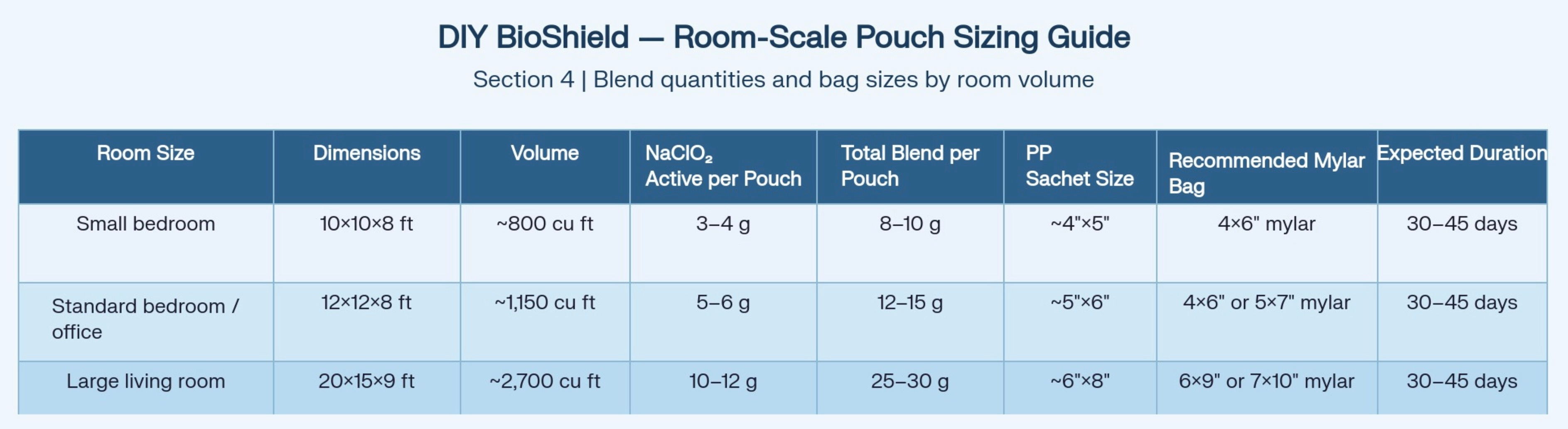
These room amounts were framed as practical DIY targets for achieving the same low-concentration occupied-space range discussed in the literature and aligning with commercial room pouch concepts such as those marketed by Safrax. [4]
Scaling the Recipe
The four-part formulation can be scaled proportionally. Using the DIY badge ratio:
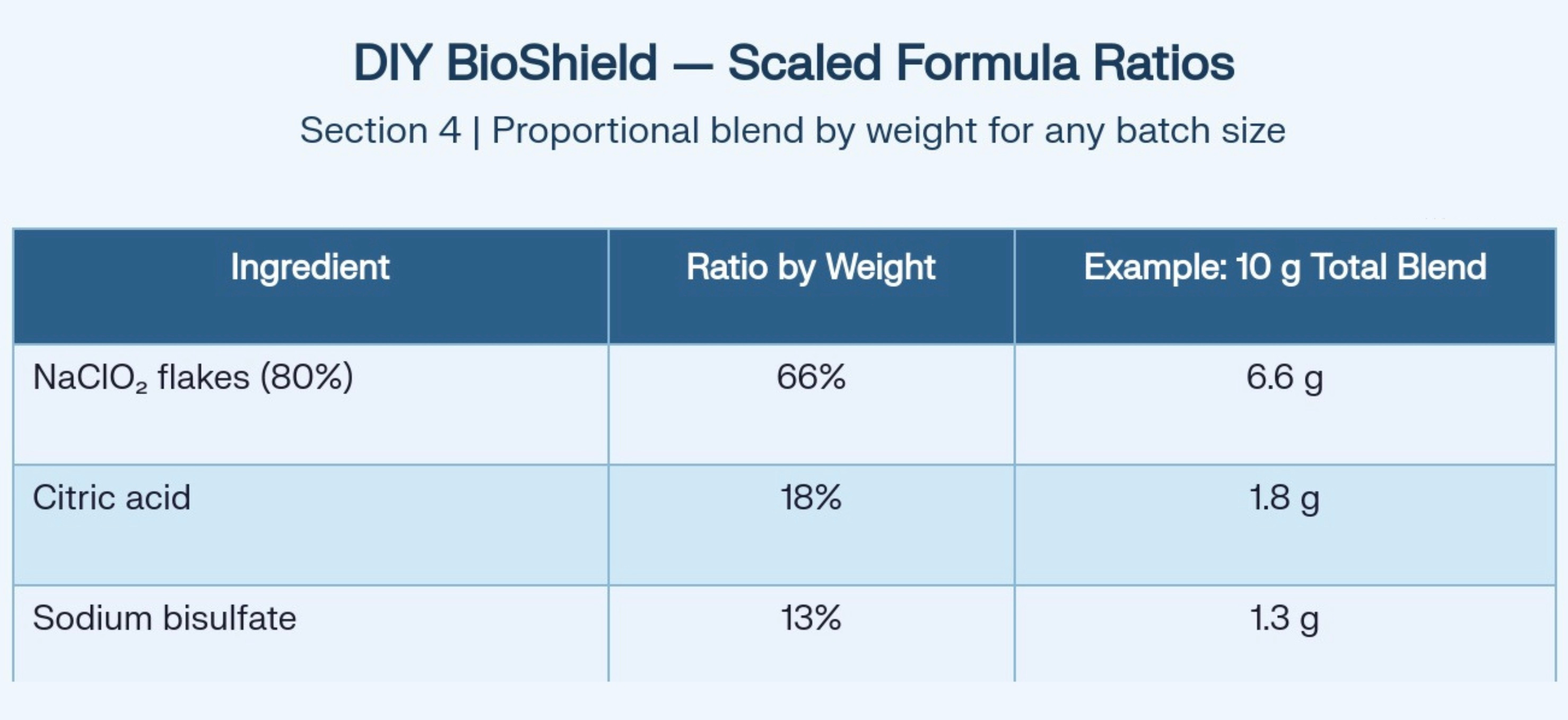
This keeps the same relationship among oxidizer, acid components, and flow aid while only increasing total mass. The PP sachet is cut proportionally larger as total blend weight increases, following the sachet sizes listed in the room sizing guide above.
Room Pouch Assembly and Placement
Use the same two-layer assembly method as the personal badge: fill a proportionally larger PP nonwoven sachet with the blended powder, heat-seal it closed, then place it inside the appropriately sized mylar bag with a desiccant packet and heat-seal the mylar. After activation (opening the mylar), the release area can be partially controlled by folding or clipping the mylar opening, which may help smooth and extend output. The sealed PP sachet itself does not need to be modified, its gas permeability is fixed by the fabric structure.
Placement matters. Since chlorine dioxide is denser than air, an elevated shelf, dresser, or nightstand can help the gas diffuse downward through the room rather than pooling near the floor immediately.
Car Application
A single 8–10 g total blend pouch is a reasonable starting point for a standard passenger vehicle interior, especially with windows closed and low air exchange. Build it the same way as the room pouch: a PP sachet inside a mylar bag, activated by opening the mylar. The PP sachet can then rest in a cupholder or be clipped to a vent without any risk of powder spilling onto the upholstery. This aligns closely with the use case already targeted by commercial slow-release ClO₂ space products. [4]
Section 5 — Conclusion
This deep dive shows that low-concentration chlorine dioxide is not fringe chemistry. It is a well-studied antimicrobial gas with peer-reviewed evidence showing useful effects against viruses and bacteria at 0.01–0.05 ppm, a range that remains below OSHA’s 0.1 ppm 8-hour exposure limit. [2, 3, 5, 6, 7, 10]
Commercial proof of concept already exists in at least three forms: the original Japanese zeolite-style badge concept, the South Korean PURE O2 Pack-Solid carrier-free pouch, and U.S. slow-release room products such as those from Safrax. The most important discovery from the DIY perspective is that the PURE O2 product shows a carrier-free powder blend can work, simplifying the project dramatically.
That leaves a practical DIY path: a dry powder formulation using sodium chlorite, sodium bisulfate, citric acid, and a small amount of fumed silica, sealed in a foil mylar pouch and activated simply by opening it. Whether used as a wearable badge or a room pouch, the aim is the same; a slow, steady background level of ClO₂ in the occupied space.
References
1. DailyMed. (n.d.). PURE O2 PACK-SOLID- sodium chlorite powder. U.S. National Library of Medicine. https://dailymed.nlm.nih.gov/dailymed/drugInfo.cfm?setid=a397afb9-53a7-e6d8-e053-2a95a90a54d4
Main product page: https://pureclo2.co.kr/bbs/board.php?bo_table=eng_product01&wr_id=4
2. Seirogan. (n.d.). Safety and efficacy of chlorine dioxide gas. Taiko Pharmaceutical Co., Ltd. https://www.seirogan.co.jp/en/research_dev/about.html
3. Morino H, et al. Effect of low-concentration chlorine dioxide gas against bacteria and viruses on a glass surface in wet environments. Lett Appl Microbiol. 2011 Dec;53(6):628-34. https://pmc.ncbi.nlm.nih.gov/articles/PMC7199474/
4. Safrax. (n.d.). SLOW RELEASE-ClO₂ odor-control pouch (4 pouches). Safrax Inc. https://safrax.com/product/slow-release-clo2-air-purifier-4-pouches/
5. Ogata, N. (2009). Effect of chlorine dioxide gas of extremely low concentration on absenteeism of schoolchildren. International Journal of Medical and Medical Sciences, 1 (7), 288–289. https://www.researchgate.net/profile/Norio-Ogata/publication/228351686_Effect_of_chlorine_dioxide_gas_of_extremely_low_concentration_on_absenteeism_of_schoolchildren/links/548968ba0cf268d28f09625a/Effect-of-chlorine-dioxide-gas-of-extremely-low-concentration-on-absenteeism-of-schoolchildren.pdf
6. Ogata, N., & Shibata, T. (2008). Protective effect of low-concentration chlorine dioxide gas against influenza A virus infection. Journal of General Virology, 89(1), 60–67. https://doi.org/10.1099/vir.0.83393-0
7. Hew YL, Isoda N, Miura T, Hiono T, Sakoda Y. Evaluation of the Efficacy of Low-Concentration Gaseous Chlorine Dioxide in Inactivating Airborne H5 High Pathogenicity Avian Influenza Virus in Vivo Model. Food Environ Virol. 2026 Jan 23;18(1):4. https://pmc.ncbi.nlm.nih.gov/articles/PMC12830401/
8. Centers for Disease Control and Prevention, National Institute for Occupational Safety and Health. Chlorine dioxide: NIOSH pocket guide to chemical hazards. U.S. Department of Health and Human Services. https://www.cdc.gov/niosh/npg/npgd0116.html
9. Ku, J. C. (1991). Chlorine dioxide: OSHA analytical method ID-202 (Method No. ID-202). U.S. Department of Labor, Occupational Safety and Health Administration, OSHA Technical Center. https://www.osha.gov/sites/default/files/methods/Chlorine%20Dioxide%20ID-202%20combined.pdf
10. Ali F, Lestari DL, Putri MD, Azmi KN. The effectiveness of chlorine dioxide gas in portable personal disinfectants to inhibit bacterial growth. J Water Health. 2023 May;21(5):537-546. https://iwaponline.com/jwh/article/21/5/537/94506/The-effectiveness-of-chlorine-dioxide-gas-in
11. U.S. Environmental Protection Agency. (2020, March 30). *U.S. EPA acts to protect the public from unregistered “Virus Shut Out” product imported into Honolulu and Guam*. https://danielstraining.com/u-s-epa-acts-to-protect-the-public-from-unregistered-virus-shut-out-product-imported-into-honolulu-and-guam/
12. U.S. Environmental Protection Agency. (2020, May 29). Fayetteville woman pleads guilty to COVID-19 related federal offense for selling unregistered pesticides on eBay. https://www.epa.gov/newsreleases/fayetteville-woman-pleads-guilty-covid-19-related-federal-offense-selling-unregistered